US unveils $1.5 trillion war budget as global military spending hits Cold War highs
Miami—On February 28, the U.S. Central Command (CENTCOM) announced the launch of Operation Epic Fury against Iran "on the orders of the U.S. president," Donald Trump.
The man who once campaigned as the "president of peace" and claimed reluctance to drag the country into war had decided to strike the Persian nation—to "dismantle Iran's security apparatus," to "prevent it from acquiring a nuclear weapon," or because "Iran was going to attack us first," depending on when Trump was asked. He even warned that "an entire civilization will die tonight," a statement that sparked global outrage.
The White House insists Trump is acting as the "president of peace," with the president himself claiming to have resolved nine wars. Yet what he has actually done is launch a war against Iran, attack Yemen, bomb Somalia, intervene in Venezuela to oust President Nicolás Maduro, and impose a puppet government. Trump's vision of peace bears little resemblance to the conventional understanding. "It looks like an armed peace framed as order—but in Trump's view, it must rely on greater firepower, more deployments, and a larger military budget," national security expert Jaime Ortiz told our outlet.
The U.S. president has paired his offensive with an unprecedented budget proposal: the 2027 defense budget requests $1.5 trillion, including $1.1 trillion in base discretionary spending and an additional $350 billion for mandatory priorities such as "critical munitions" and expansion of the defense industrial base. Meanwhile, non-military spending is slashed by $73 billion—a 10% cut.
Trump makes no effort to conceal his militaristic ambitions: he even pushed to rename the Department of Defense the Department of War. The budget proposal emphasizes that the funding should create "opportunities for new players."
According to U.S. media reports, the administration is in talks with automakers like General Motors and Ford, among other companies, to shift production toward weapons and military supplies.
For Trump, war is no longer a strategic doctrine but an "industrial policy"—a business, Ortiz notes.
The most visible symbol of this shift is the so-called Golden Dome, which Trump unveiled in January 2025, just after beginning his second term, to counter "the most catastrophic threat": a potential attack by ballistic, hypersonic, cruise, and other missiles.
Ortiz explains that Trump's directive calls for accelerating a space-based surveillance system to detect and track hypersonic missiles. It also proposes developing "proliferated space interceptors"—numerous distributed interception systems in space, rather than a few, capable of destroying missiles in their "boost phase," the first minutes of flight when they are still accelerating and most vulnerable.
Simultaneously, the plan seeks to deploy capabilities to destroy missiles "before launch"—that is, striking the sites, platforms, or systems from which they would be fired before they take off. It also combines "kinetic" tools, which physically destroy a target through impact or explosion, with "non-kinetic" tools, which do not strike the target directly but can disable it through electronic interference, cyberattacks, directed energy, or system jamming.
Additionally, the order calls for reviewing ways to deepen cooperation with allies and "expedite" the delivery of U.S. missile defense capabilities to partners. "The Golden Dome is, by design, a space-based military platform and a mechanism for international alignment," Ortiz stresses.
Trump marketed the plan as a $175 billion system that could be operational before the end of his term. But available technical assessments do not support such optimism. The Associated Press (AP) reported that, "for the first time," the program would place U.S. weapons in space, while the Congressional Budget Office estimated that the space-based component alone could cost up to $542 billion over 20 years. A recurring theme emerges: the political promise is simpler and cheaper than the technical reality unfolding.
A Rearmament Ecosystem
The Golden Dome Is Just the Beginning
The same budget also funds the F-47 stealth fighter, ramps up naval power with $65.8 billion allocated to build 18 combat ships and 16 non-combat vessels, orders the purchase of "12 critical munitions," expands investment in strategic minerals, and accelerates drone and counter-drone system acquisitions. The White House presents all of this as a single package: territorial defense, space, fleet modernization, munitions, minerals, and military automation. The plan does not funnel money into just one weapon—it organizes an entire ecosystem of rearmament.
The F-47 encapsulates the logic of this new phase. The Air Force awarded Boeing the development contract for what it calls "the world's first sixth-generation fighter." Trump hailed it as "unmatched by anything in the world," while the Pentagon defended it as a "historic" investment in the U.S. military-industrial base. This is not just about a new aircraft; it signals Washington's push to reclaim air superiority through costlier, more complex platforms tied to long-term industrial supply chains.
The beneficiaries of this shift are already clear, even before all contracts are finalized. Boeing stands out as the biggest winner with the F-47. Major U.S. shipyards gain from the naval expansion, while missile, radar, sensor, satellite, air defense, drone, and critical mineral sectors move to the forefront as the budget directs fresh funding their way. "When the White House talks about expanding the defense industrial base and making room for new players, what it's really saying is that war is no longer just about stockpiling weapons—it's now also defined by the manufacturing of ever-wider corporate networks," one expert notes.
The Stockholm International Peace Research Institute (SIPRI) reported that global military spending reached $2.718 trillion in 2024, marking a real increase of 9.4%—the steepest rise since the end of the Cold War. The same institute warned that over 100 countries boosted their military budgets that year. This data is crucial because it places Trump within a global trend, but also because it reveals how the White House is riding the wave: rather than curbing international rearmament, it is accelerating it, legitimizing it, and leveraging it to drive its own industrial expansion.
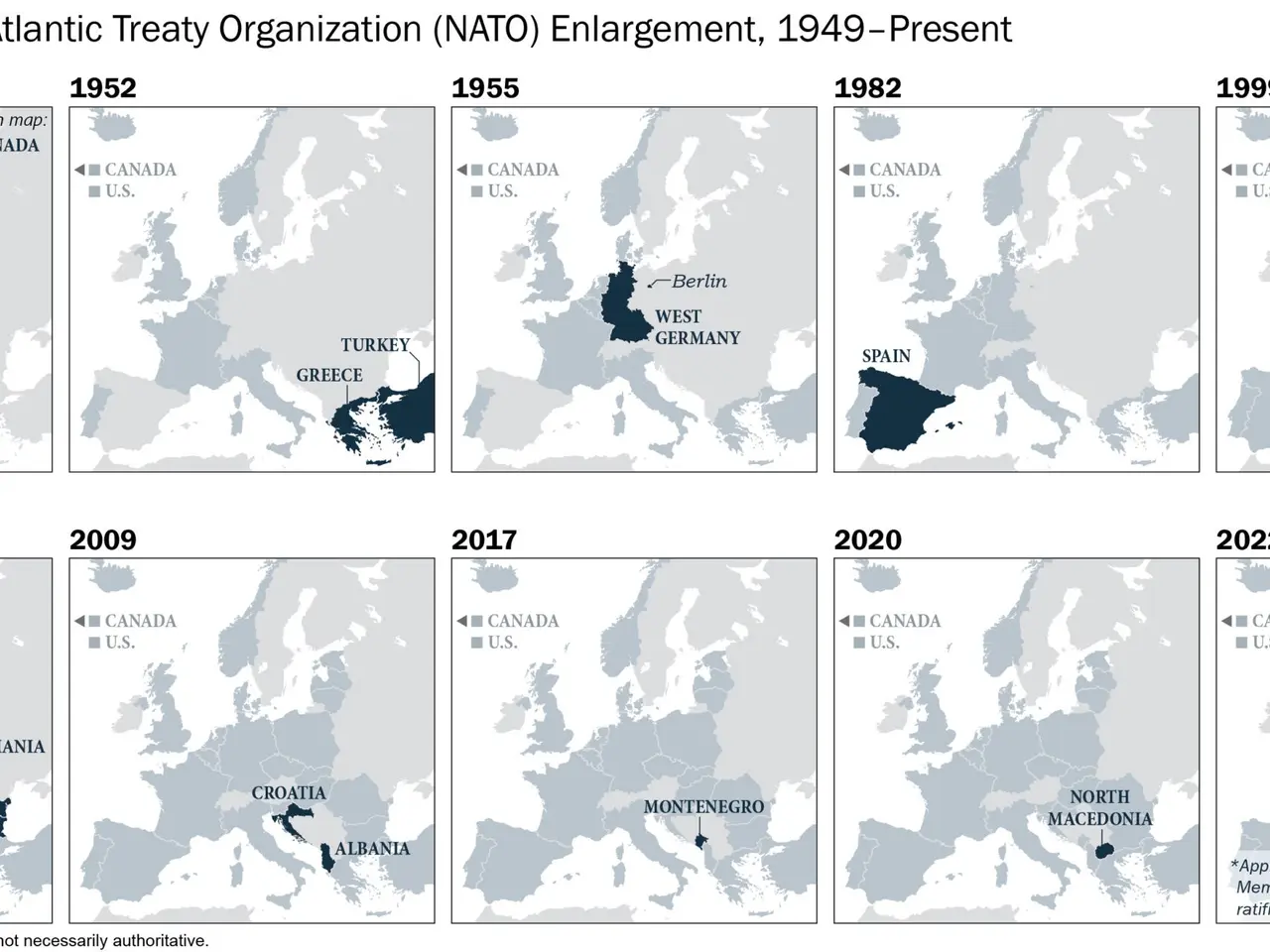
Within NATO, the shift has already been codified in official policy. The 2025 Hague Declaration commits allies to spending 5% of their annual GDP on defense and related security by 2035, with at least 3.5% earmarked for core defense and up to 1.5% for critical infrastructure, innovation, resilience, and industrial capacity.
In March, Mark Rutte added that "the numbers speak for themselves," noting that investment by European allies and Canada surged by 20% in 2025. The goal is not just to spend more—it's to produce more, and faster. The deepest consequence of all this is that rearmament is no longer confined to land, sea, and air; it is extending into space and reigniting the nuclear arms race. The Golden Dome itself opens the door to U.S. weapons in orbit. When a space-based shield promises to intercept threats before, during, and after launch, adversarial states respond with more missiles, greater saturation, evasion tactics, and accelerated modernization. The result is a broader, harder-to-contain arms competition.
Trump is not ending an era of war—he is ushering in a new one where conflict operates as industrial policy, a space program, a deterrence doctrine, and a budgetary argument. The Golden Dome, the F-47, the expanded fleet, critical munitions, strategic minerals, and operations in Iran, Yemen, and Somalia are all part of the same historic decision. And as Washington moves in this direction, dozens of governments worldwide are doing the same. "That is the significance of the moment," Ortiz concludes. "The president who claims to bring peace is instead expanding the business, the legitimacy, and the global scale of the war industry."
Read also:
- Peptide YY (PYY): Exploring its Role in Appetite Suppression, Intestinal Health, and Cognitive Links
- Toddler Health: Rotavirus Signs, Origins, and Potential Complications
- Digestive issues and heart discomfort: Root causes and associated health conditions
- House Infernos: Deadly Hazards Surpassing the Flames