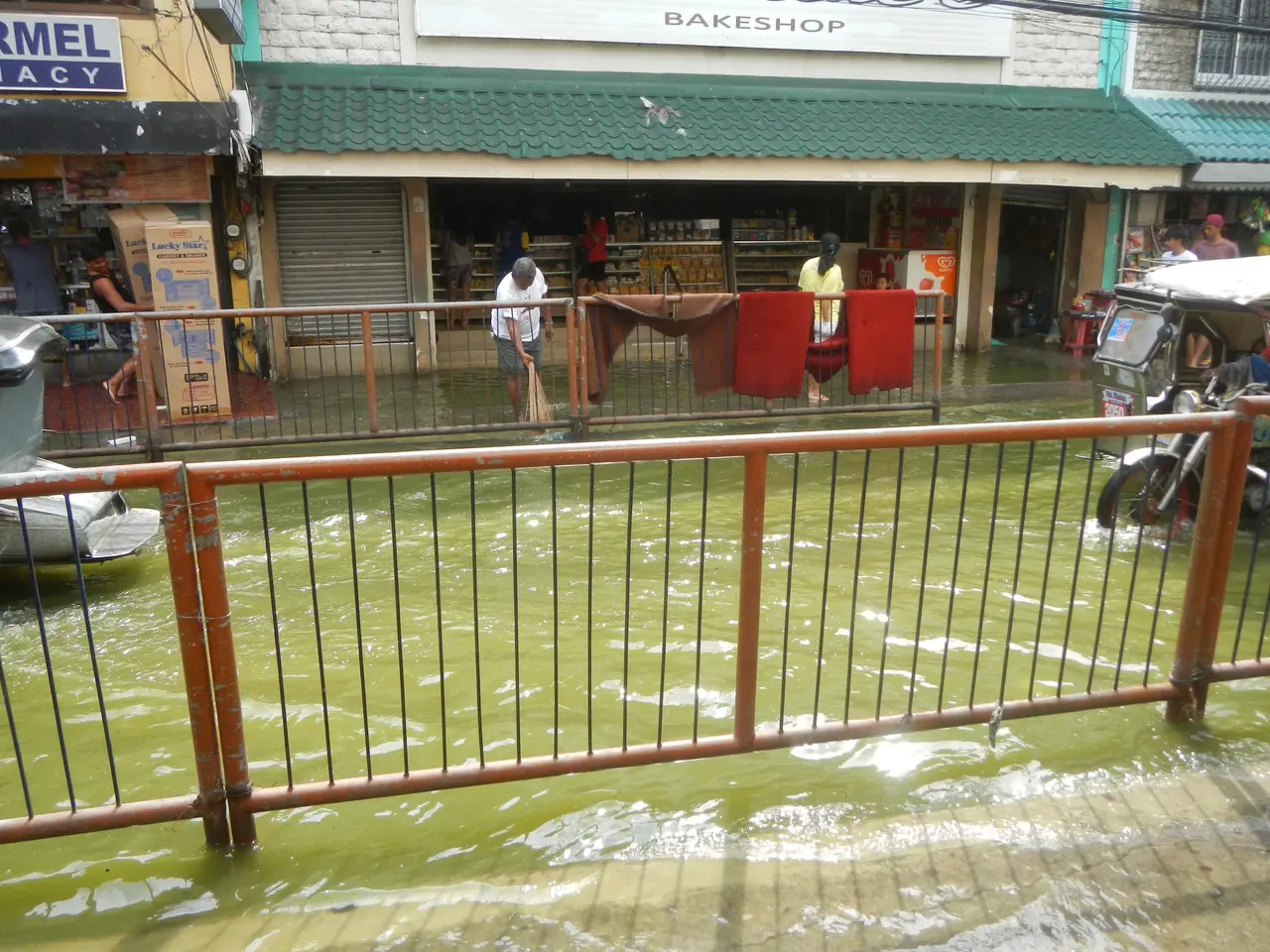
Petropavl races to reinforce defences ahead of historic flood peak
Flood Peak Expected in Petropavl on April 4–5 as City Reinforces Protective Dikes
Authorities in Petropavl are racing to complete the reinforcement of flood defenses ahead of the anticipated peak of the first wave of flooding, the government reported.
During a working visit, Deputy Prime Minister Kanat Bozumbayev inspected the condition of the dike along Ushev Street, which shields the Podgora microdistrict. He also reviewed the construction of a protective embankment near the Biopond retention basin, with completion scheduled for December.
Meanwhile, the region is already grappling with a second wave of flooding. Bozumbayev visited Sergeyevka, home to a hydraulic junction regulating the flow of the Yesil River, where dredging and reinforcement work has been underway since last year.
He also surveyed vulnerable sections along the Yesil in the villages of Nikolayevka, Pokrovka, Yavlanka, Bolshaya Malyshka, and Sokolovka. A total of 116 settlements remain at risk, though regional governor Gauez Nurmukhambetov assured that the situation is under control.
The deputy prime minister toured restored dikes in the villages of Beskol, Pribrezhnoe, and Teplichnoe, as well as a bridge in Novonikolskoye, the Petropavl hydraulic junction, and a newly constructed bypass canal in Zarechnoye—built this year to divert floodwaters.
According to regional authorities, an engineering action plan is being implemented across the area. Flood risks have been reduced in 60 settlements, with over 80 kilometers of protective structures built or reinforced. Officials have also installed culverts and cleared irrigation channels and the beds of smaller rivers.
Bozumbayev instructed local emergency services and regional leaders to maintain round-the-clock monitoring, regulate reservoir water levels, and provide timely alerts to residents in high-risk zones.
See also: * Water Shortages: Which Kazakh Regions Lack Reservoirs and When New Ones Will Be Built—Ministry of Water Resources * North Kazakhstan Hydraulic Structures Reinforced Ahead of Flood Season
Read also:
- Ignorant Youth Unfamiliar with Quebec's Cultural Landscape
- PCOS-related Gas Buildup: Explanation, Control Strategies, and Further Insights
- Astral Lore and Celestial Arrangements: Defining Terms & In-Depth Insights - Historical Accounts & Glossary of Cosmic Mythology
- "Rural Idyls with Supercars: Astonishing Sites Where Residents Cruise McLarens and Ferraris for Groceries"