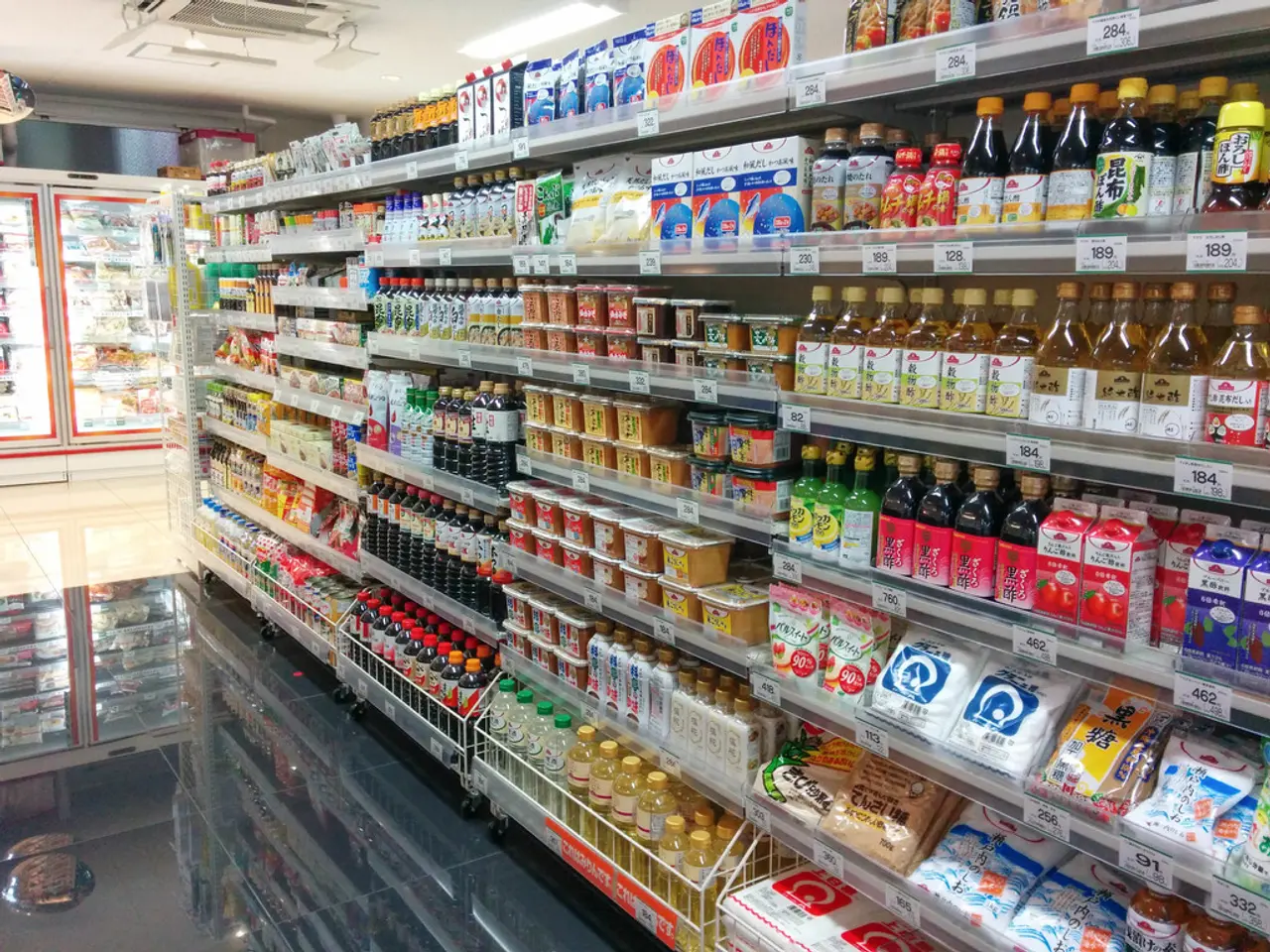
Skyrocketing Food Costs: An Unbearable Strain on Household Budgets
In a surprising development, Germany's wage growth has outpaced consumer prices in the second quarter, with wages rising by 4.1%. However, this increase appears to be insufficient to offset the persistent inflation in the country.
The core inflation rate, which excludes food and energy prices, has remained at 2.7% for the past three months. This is higher than the previously calculated 2.0% for both June and July, and the preliminary data for August shows consumer prices increasing by 2.2%.
The higher inflation rate means a lower purchasing power for consumers in Germany. Despite the wage increases, purchasing power in the country remains below the 2019 level. The price-depressing effect of energy prices is waning, and economists expect inflation rates above the 2-percent mark for the coming months.
Commerzbank's chief economist, Jörg Krämer, commented that inflation in Germany is more persistent than expected. He also noted that losses in purchasing power, particularly from 2022 and 2023, are increasingly being offset. However, Thomas Gitzel, chief economist of the Liechtenstein VP Bank, does not expect a further noticeable decrease in the inflation rate.
Food prices continue to put a strain on households in Germany. Despite the recent wage increases, the real wage increase compared to the previous year is only 1.9%. Food prices could potentially increase again, adding further pressure on households' budgets.
It's worth noting that the core inflation rate does not include prices for volatile items like food and energy. These prices have been a significant factor in the overall inflation rate. The current CEO of Commerzbank, who commented on the inflation situation in Germany in August 2022, is Bettina Orlopp.
Despite the challenges, there are signs of recovery. The wage level of 2019 has not yet been reached in Germany, according to KfW. However, losses in purchasing power, particularly from 2022 and 2023, are increasingly being offset. The price increases from July to August of this year were only 0.1%.
In conclusion, while Germany's wage growth has outpaced consumer prices, the persistent inflation rate continues to outweigh the benefits. The core inflation rate does not seem eager to ease further, and economists expect inflation rates above the 2-percent mark for the coming months. The impact of food prices on households remains a significant concern.
Read also:
- Peptide YY (PYY): Exploring its Role in Appetite Suppression, Intestinal Health, and Cognitive Links
- Toddler Health: Rotavirus Signs, Origins, and Potential Complications
- Digestive issues and heart discomfort: Root causes and associated health conditions
- House Infernos: Deadly Hazards Surpassing the Flames