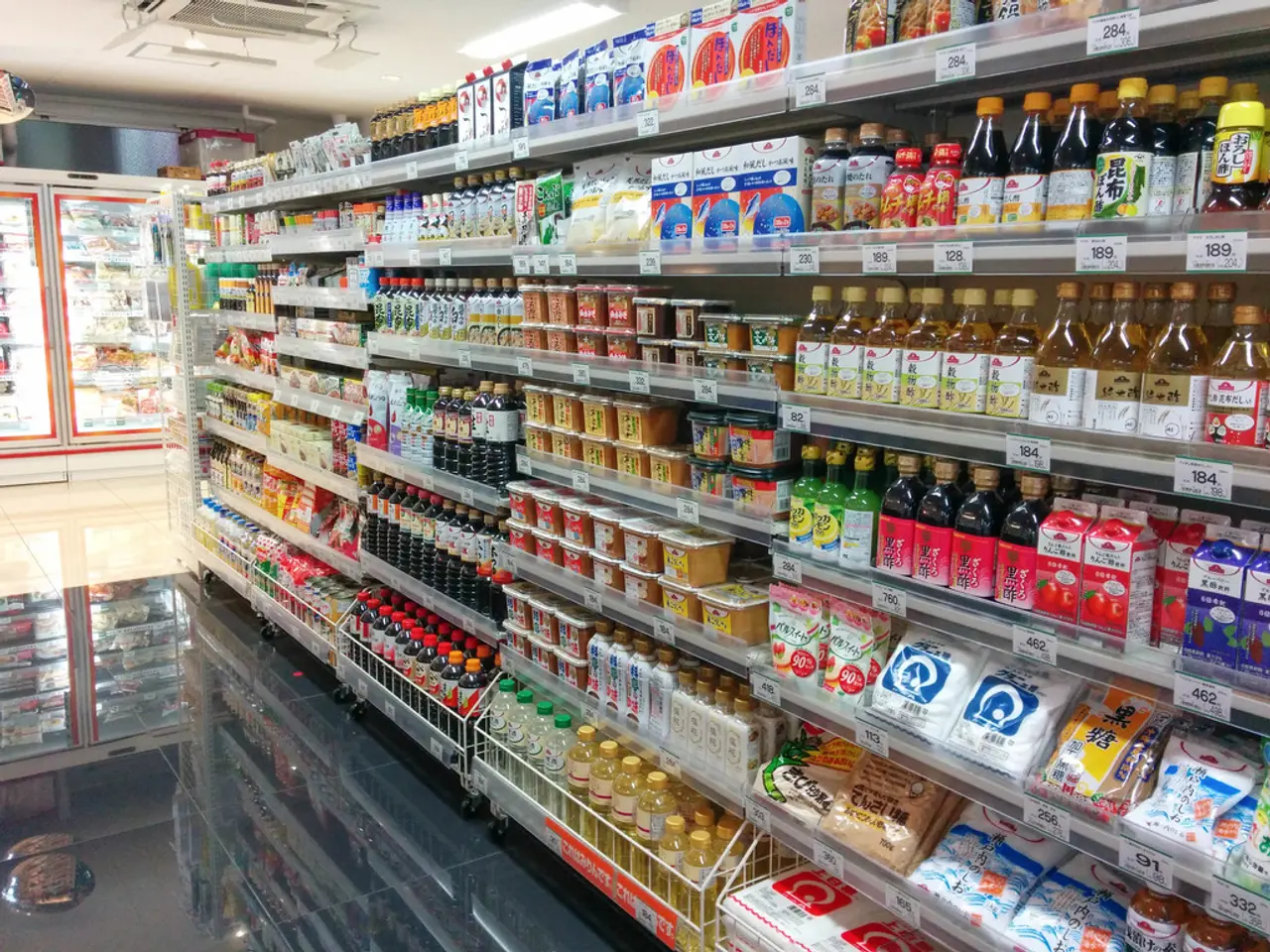
Prices escalate at a 2.2% increase, making food items costlier
In August, consumer prices in Germany increased by 2.2% compared to the same month last year, according to preliminary figures from the Federal Statistical Office. This marks a slight decrease from the 2.4% increase in July and the 6.9% spike seen in 2022.
Energy prices were 2.4% cheaper in August compared to a year ago, but this base effect is contributing to the current inflation rate's upward trend. However, the price-depressing effect of energy prices is waning, and food prices could tend to rise again.
Food prices, in fact, increased by 2.5% in August compared to a year ago. Some vegetables saw a decrease in prices in certain regions, but fruit prices rose, and coffee and chocolate prices increased significantly. In August 2022, regions like Nordrhein-Westfalen observed a notably increased price development for coffee and chocolate, with prices rising by up to about 25% compared to the previous year.
Services were 3.1% more expensive than a year ago in August, remaining at the same level as in July. The unusually high inflation in services has decreased in recent months but did not further decline in August.
The core inflation rate (excluding volatile food and energy prices) has been at 2.7% for the past three months. Despite this, it does not seem to want to give in any further. Economists expect an average inflation rate of around 2% for Germany for the full year.
Thomas Gitzel, chief economist of the Liechtenstein VP Bank, does not expect a further noticeable decrease in the inflation rate for the time being. Rising wages are a reason for the increased prices for services.
Wages rose by 4.1% in the second quarter, outpacing consumer prices, resulting in a real wage increase of 1.9% compared to the previous year. However, higher inflation reduces purchasing power, meaning people can afford less for a euro.
The European Central Bank sees its target of stable prices fulfilled for the euro area as a whole with a medium-term inflation rate of 2.0%. Despite the current inflation rate being above this target, the Bank's focus remains on maintaining price stability over the medium term.
From July to August, prices rose by 0.1%. The Bank will closely monitor this trend and adjust its monetary policy as necessary to ensure a sustainable return to its 2.0% inflation target.
Read also:
- Peptide YY (PYY): Exploring its Role in Appetite Suppression, Intestinal Health, and Cognitive Links
- Toddler Health: Rotavirus Signs, Origins, and Potential Complications
- Digestive issues and heart discomfort: Root causes and associated health conditions
- House Infernos: Deadly Hazards Surpassing the Flames