Yearly Infestation of Bluegrass Weevils
The Annual Bluegrass Weevil (ABW), a small but destructive pest, is causing concern for golf courses and sports fields across the United States and Canada. This weevil primarily infests short-cut annual bluegrass (Poa annua) and occasionally creeping bentgrass (Agrostis stolonifera).
The ABW's lifecycle begins in spring, when adults emerge from their overwintering sites in increasing numbers as Forsythia spp. are in full bloom. They migrate to the nearest short-mown turf to feed, mate, and lay eggs. Egg-laying begins during the full bloom of eastern redbud or flowering dogwood, and the eggs are oblong and pale yellow to white, transitioning to a smoky black color within days of being laid.
Each larva can kill a dozen of grass stems, causing the most substantial damage during the late instar stage when they feed on the crown of turfgrass and the base of stems. The damage is typically first spotted in collars and along the edges of fairways.
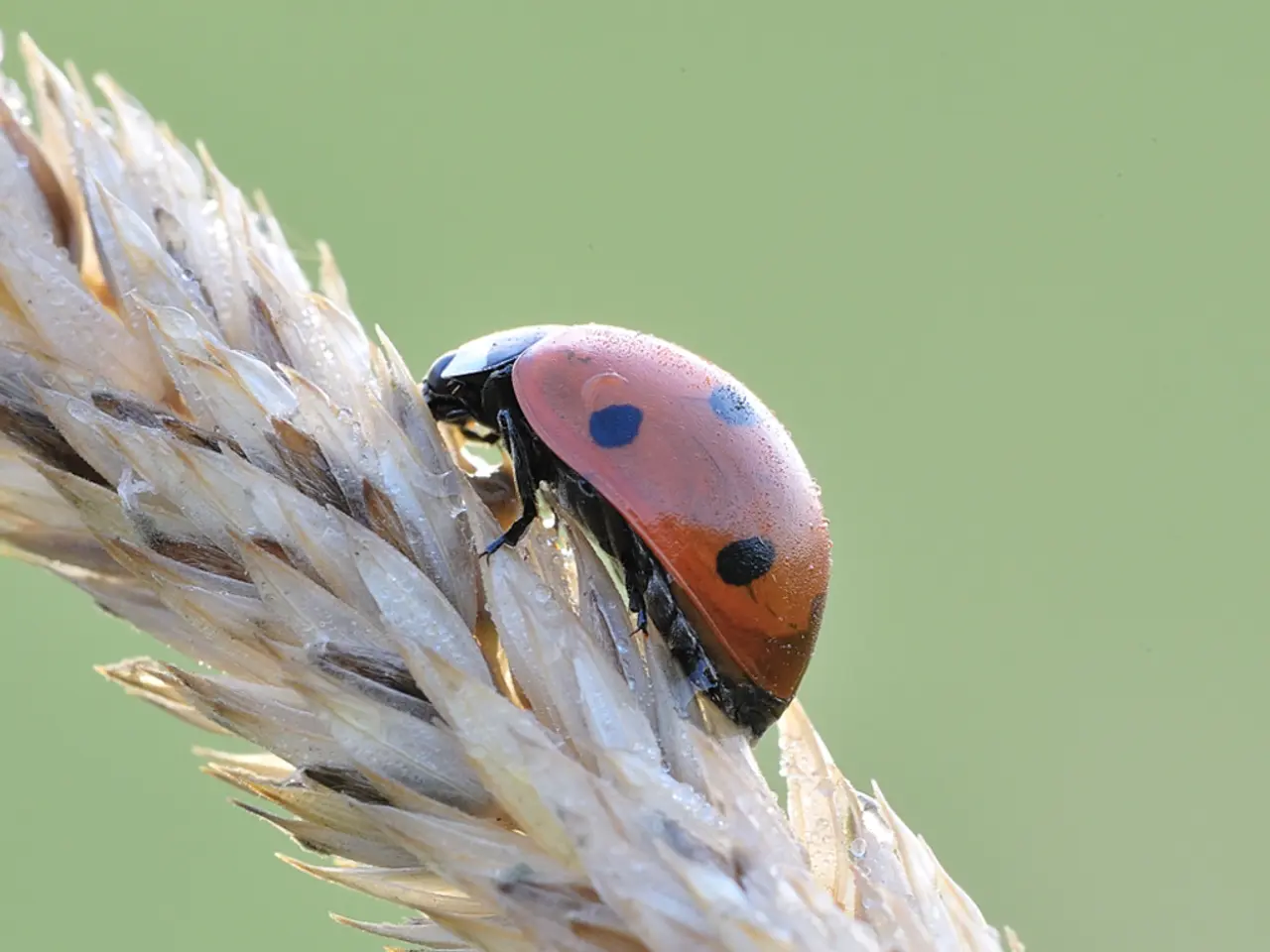
Adult ABW measure less than 1/5 inch (< 5 millimeters) in length, appearing mottled brown when newly emerged, and shiny black as they age. Soap flushing, vacuuming, and monitoring clippings can be used to monitor adult ABW, with soap flushing being the most efficient method.
Insecticides, such as organophosphates and pyrethroids, are primarily used for ABW control, targeting the adult stage. However, pyrethroids have been associated with resistance development in ABW, due to a general resistance mechanism of enhanced enzymatic detoxification. Therefore, larvicides may be more viable options for populations with resistance to adulticides.
Biological control agents, such as beneficial nematodes Steinernema carpocapsae and Heterorhabditis bacteriophora, may serve as effective alternatives to insecticides, especially for control of insecticide-resistant larvae. These nematodes are microscopic roundworms that parasitize and kill insects, including the ABW larvae.
Saline solution and Berlese funnels can be used to extract larvae from soil cores. However, Berlese funnels are only suitable for assessing larvae, not pupae. Plant phenology may be used to indicate ABW developmental stages, making it easier to time applications of insecticides or biological control agents.
The ABW was first reported in Ohio in 2007 and has since spread to regions across the state. Its distribution range stretches from the northeastern United States into the Midwest and eastern Canada. Peak adult populations often occur when forsythia reaches "half gold (flower) and half green (leaf)".
In conclusion, the Annual Bluegrass Weevil is a significant threat to golf courses and sports fields, causing substantial damage to turfgrass. Understanding its lifecycle and using appropriate control measures, such as insecticides, larvicides, and biological control agents, can help mitigate its impact. Regular monitoring and timely applications are crucial in managing this destructive pest.
Read also:
- Peptide YY (PYY): Exploring its Role in Appetite Suppression, Intestinal Health, and Cognitive Links
- Toddler Health: Rotavirus Signs, Origins, and Potential Complications
- Digestive issues and heart discomfort: Root causes and associated health conditions
- House Infernos: Deadly Hazards Surpassing the Flames