With budget reductions, the Forest Service aims to increase work hours for seasonal firefighters in the current year
U.S. Forest Service Grants Additional Work Hours to Wildland Firefighters
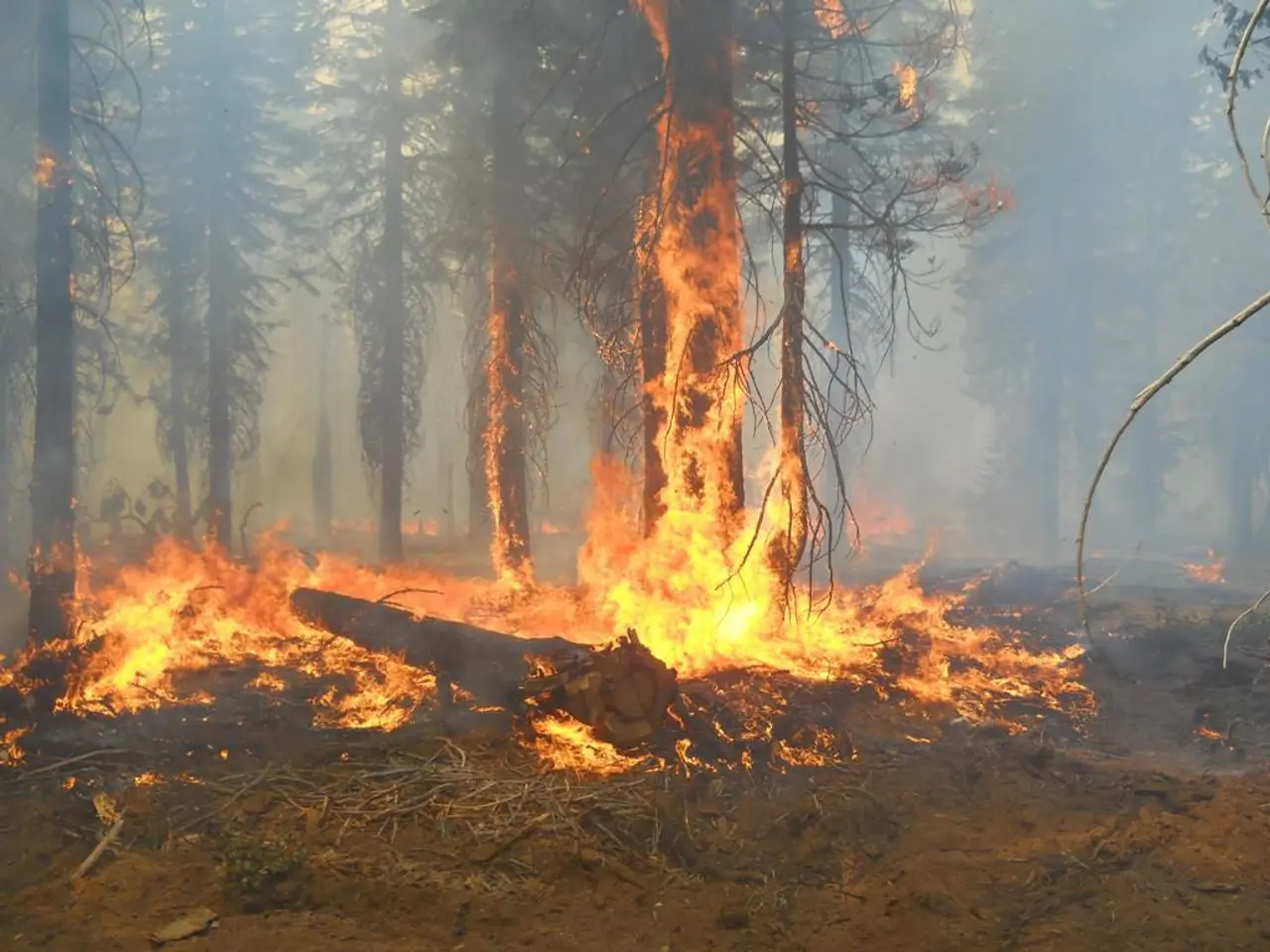
The U.S. Forest Service (USFS) has made an unprecedented move in recent days, granting temporary work hour extensions to its wildland firefighters and related personnel for the current wildfire season. This decision, which covers the period from the beginning of the year up to the end of the calendar year (January 1 to December 31), is a response to the ongoing challenges posed by the current fire season.
According to reports, the agency is seeking a stopgap measure because the current fire season is unlikely to ease up, given poor rainfall totals. This decision comes at a time when the nation is currently at a level four on the wildfire preparedness scale, a level that indicates an increased potential for significant wildfires.
Bobbie Scopa, a former USFS operations section chief, finds it unusual for the service to waive the hours cap when the national wildfire preparedness level is at level four, not five (the highest on the scale). Moreover, it is also unusual for the cap to be waived so early in the season, according to Scopa.
Under the new arrangements, the work hours for these employees have been extended from 1,039 hours to 1,560 hours, equivalent to a 30-hour work week. It's important to note that these extensions are optional for employees and will not affect their eligibility for unemployment.
The Forest Service has faced concerns from employees about staffing levels, with concerns about a loss of institutional knowledge and shortages of key personnel on incident teams. Last year, the Forest Service announced it would not hire seasonal staff in 2025, but exempted fire-related positions from the freeze. However, as of the end of July, the Forest Service had 11,364 firefighters on board, exceeding its goal for 2025.
Despite this, the agency acknowledges that the total number of firefighters would not meet its needs for the wildfire season. Nearly 5,000 USFS employees have accepted incentive offers to leave the agency, including about 1,400 with "red cards" who were asked to volunteer for the current fire season. A USFS firefighter stated that the agency is "scared as hell about staffing" due to early retirement offers and firings affecting the number of red card holders.
The Forest Service is also undergoing reorganisation, phasing out its nine regional offices and four of its five Research Stations. The Trump administration proposed slashing USFS staffing by 26% in its fiscal 2026 budget proposal, not accounting for a request to consolidate federal firefighting within the Interior Department. However, there has been bipartisan pushback on the Forest Service's workforce plans.
The waiver applies to a range of positions, including firefighters, biological technicians, archeologists, vehicle dispatchers, engineers, supply technicians, and others. The Forest Service has waived the hours cap for temporary seasonal fire employees in 2022, marking a rare occurrence in the last 20 years.
While this move is unusual, it underscores the challenges faced by the USFS in managing wildfires during a time of staffing shortages and changing climate conditions. It remains to be seen how this decision will impact the agency's operations and its ability to respond effectively to wildfire threats in the coming months.