U.S. Department of Homeland Security extends forced labor prohibition to imported steel and lithium, impeding billions of dollars worth of Chinese commodities.
The Department of Homeland Security (DHS) is taking a tougher stance against Chinese imports suspected of using forced labor, as part of an ongoing effort to combat human rights abuses.
Under the Uyghur Forced Labor Protection Act (UFLPA), around 10,000 shipments worth nearly $900 million have already been turned away, and as of August 1, Customs and Border Protection has stopped an additional 16,700 shipments, worth approximately $3.7 billion, for further examination.
The UFLPA, which was passed by Congress in 2022 with broad bipartisan support, targets goods made wholly or in part with forced labor from China's Xinjiang region. Currently, products like steel, copper, lithium, caustic soda, and red dates coming from China are designated as "high priority" for inspection.
The DHS is particularly focusing on the copper and lithium sectors, as well as sectors like agriculture, batteries, electronics, food additives, metals, plastics, and textiles, due to suspicions of forced labor in their supply chains. These sectors were added as high-priority for enforcement under the UFLPA in 2025.
The law operates on a "rebuttable presumption," meaning that any product connected to Xinjiang or listed entities is assumed to involve forced labor unless companies can prove otherwise.
China dominates the global production of key materials like lithium, rare earths, and industrial chemicals critical to the energy transition and defense supply chains. However, rights groups and U.S. officials have accused the Chinese government of detaining more than a million Uyghurs and other Muslim minorities in camps, where many are subjected to indoctrination, surveillance, and forced labor.
Beijing has repeatedly denied the allegations, calling them fabrications designed to contain China's rise. The Energy Fair Trade Coalition executive director, Bret Manley, recently discussed China's rare earth mineral trade with the U.S. and its impact on national security.
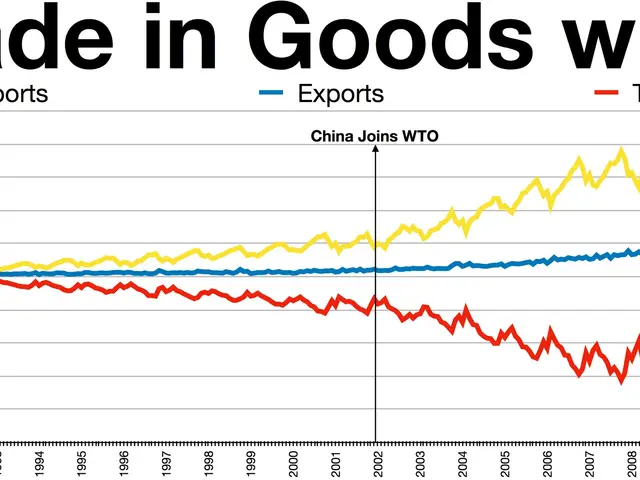
Secretary Kristi Noem stated that the use of slave labor is repulsive, and Chinese companies will be held accountable for abuses and threats to prosperity posed by forced labor practices. The Trump administration previously expanded the deadline for triple-digit tariffs on China to allow more time for negotiation, but after the two sides began to negotiate, the U.S. pared back its tariffs to 30% and China rolled back to 10%.
The UFLPA has steadily widened its enforcement, now including sectors like agriculture, batteries, electronics, food additives, metals, plastics, and textiles. Caustic soda, an industrial chemical used in various industries including aluminum production, paper-making, textiles, soap, petroleum refining, etc., is now under scrutiny. Red dates, a fruit grown in China and often dried and used in teas and snacks, are also being inspected.
As the U.S. continues to investigate and crackdown on Chinese imports suspected of using forced labor, the impact on global supply chains and geopolitical relations remains to be seen.
Read also:
- Peptide YY (PYY): Exploring its Role in Appetite Suppression, Intestinal Health, and Cognitive Links
- Easing Pedestrian Traffic Signal Pressure
- Astral Lore and Celestial Arrangements: Defining Terms & In-Depth Insights - Historical Accounts & Glossary of Cosmic Mythology
- ICE directed to enhance detention conditions following NYC immigrants' allegations of maltreatment