Transformed Crop Rotation: Introduction of Rapeseed Varieties
Rapeseed farmers are facing a growing challenge in controlling weeds, particularly volunteer corn, field fox-tail, crabgrass, meadow grass, and bentgrass species. These weeds can outcompete rapeseed for water and nutrients, leading to significant yield losses.
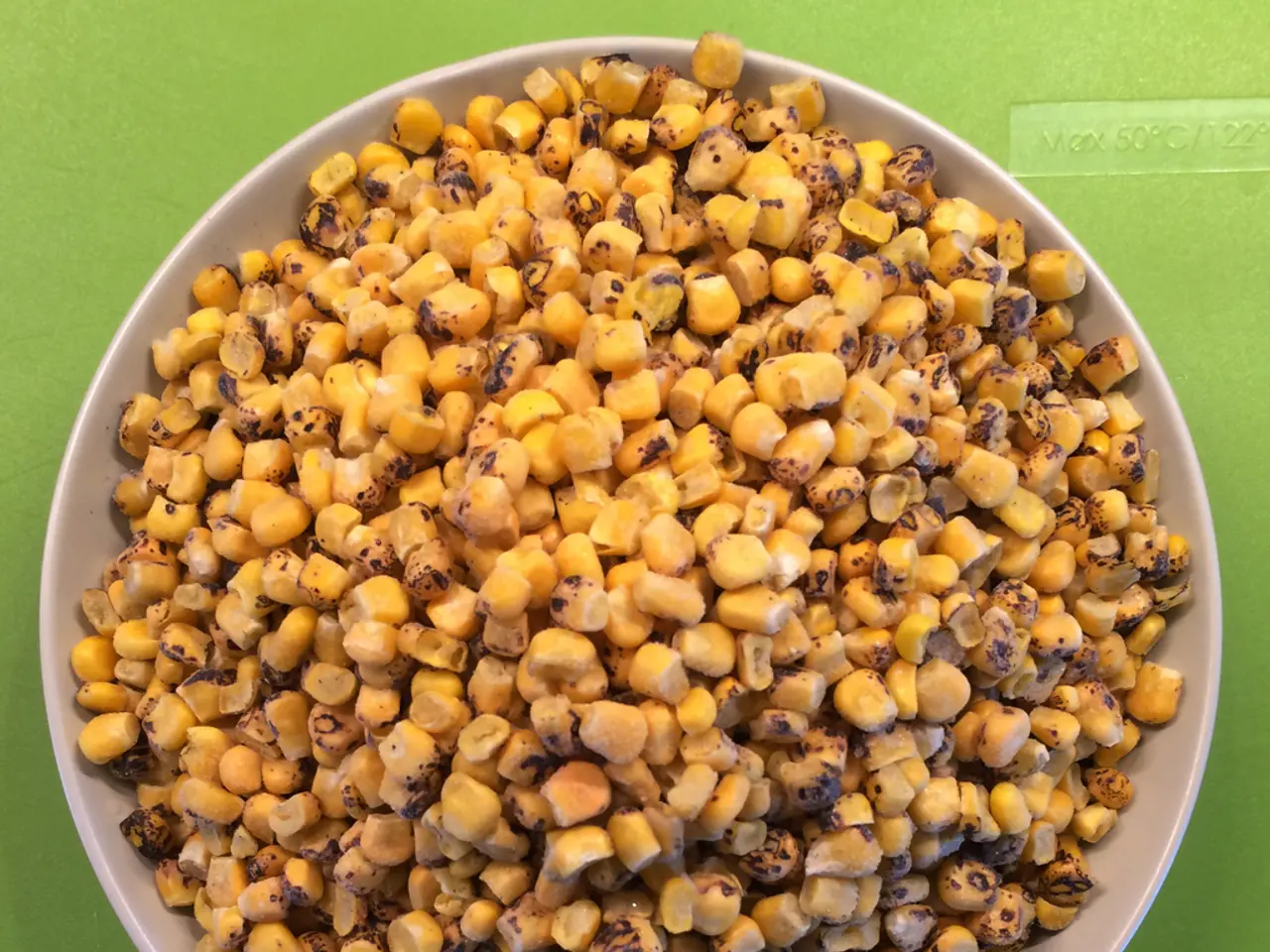
Volunteer corn, which emerges simultaneously with rapeseed due to the close temporal sequence between grain harvest and rapeseed sowing, poor stubble management, drought after harvest, and lack of emergence, is particularly critical. In the strips behind the combine sieve box, yield losses of over 50% can occur if volunteer corn is not controlled.
To combat this issue, a propyzamide (Kerb) application is essential for controlling late-emerging weeds in rapeseed crops. This application is crucial for maintaining a clean rapeseed crop, but is often avoided due to increased costs. After emergence, volunteer corn should be controlled until the 2-leaf stage of rapeseed. In cases of high volunteer corn pressure, it should be controlled at the 2 to 3-leaf stage.
However, two or more herbicide treatments are required to control volunteer corn, as the plants emerge at different times. This ensures that late-emerging plants are also effectively controlled. The goal remains to have all weeds controlled by the 6-leaf stage of rapeseed.
In addition, the control of volunteer corn should be continued until the 2-leaf stage of rapeseed, and at the 2 to 3-leaf stage in cases of high pressure. The application of propyzamide is not repeated once the weeds have reached the 4-leaf stage of rapeseed.
Propyzamide is an important product for controlling weeds in rapeseed crops. In fields with existing weed problems, a propyzamide application in the fall is necessary for weed control. The goal is to have all weeds controlled by the 6-leaf stage of rapeseed, preventing them from outcompeting rapeseed for water and nutrients.
In conclusion, managing volunteer corn and weeds in rapeseed crops is a critical aspect of farming success. The use of propyzamide and timely herbicide treatments can help farmers maintain a clean and productive rapeseed crop.