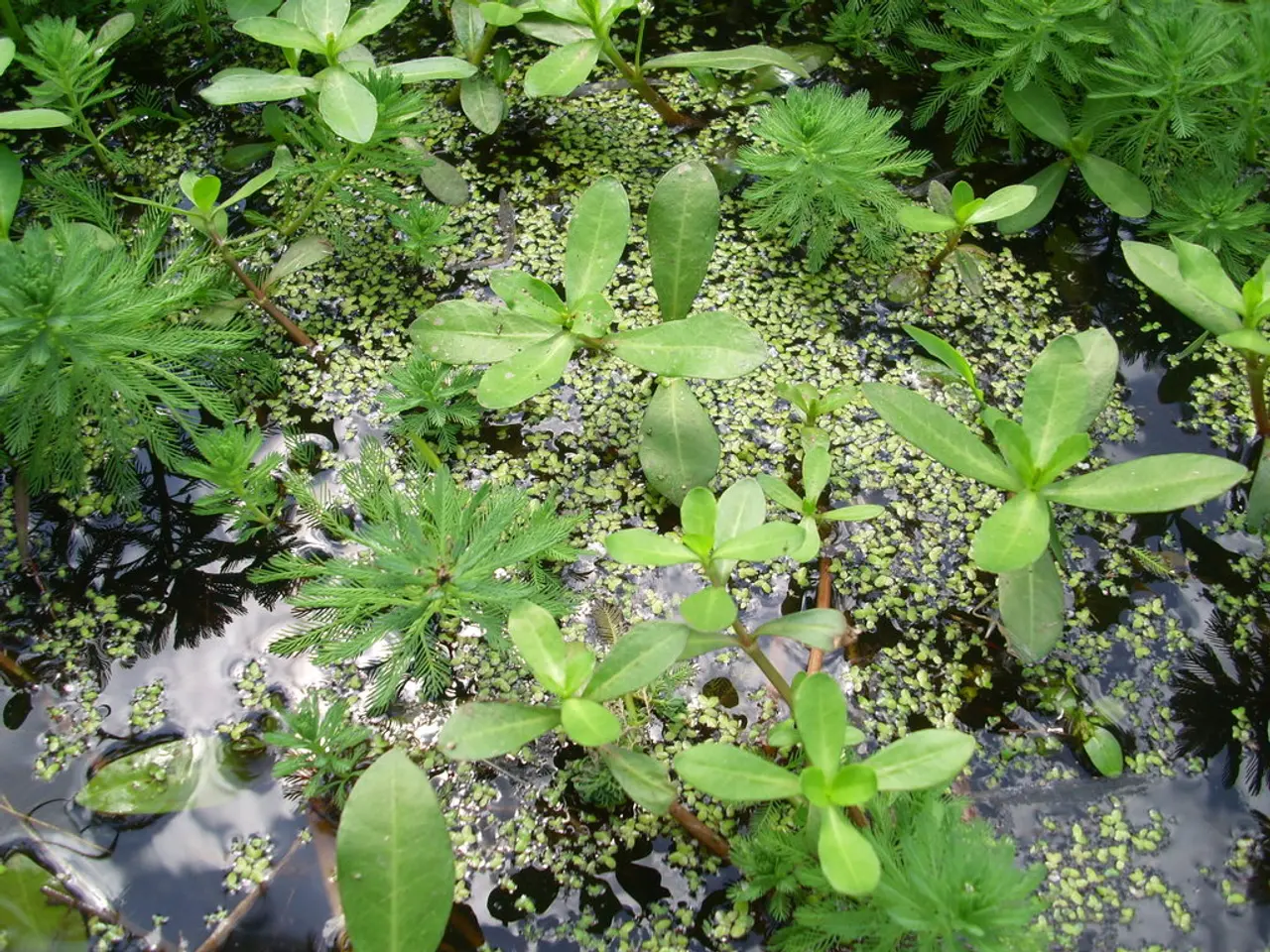
Toxic bloom grows in New Pond waterbody
In the heart of our community, the New Pond has recently seen an unusual growth of blue-green algae, a type of bacteria often referred to as Cyanobacteria. This development is attributed to the unusually warm and dry spring we experienced this year.
Blue-green algae, despite their name, are not algae but bacteria. They thrive in warm and sunny conditions, which is why the first summer month, June, was exceptionally warm and dry. However, it's important to note that the New Pond, not being a swimming lake, does not pose an immediate health risk to humans.
While the bloom is not yet at its peak, it's essential to be vigilant. High temperatures favor the spread of blue-green algae, and as the weather cools, we may see the bloom grow. A metallic blue tint sometimes appears in the blue-green algae later, but for now, the first observed blue-green algae in the New Pond are greenish-shimmering.
Swimming lakes, on the other hand, have their quality controlled by health authorities. They are closed at certain threshold values as precautionary measures to protect the public. The organization that monitors the water quality in New Pond and may close it based on certain thresholds is the "Environmental Protection Agency" (EPA).
It's crucial to remember that the main health risk from blue-green algae is from drinking the water. Some species of blue-green algae produce a toxin, posing a health risk to both animals and humans. However, the presence of blue-green algae toxins in a "carpet-like spread" is very unlikely.
The peak season for the blue-green algae is typically in mid to late August. By then, we should have a clearer picture of the extent of the bloom in the New Pond. Until then, let's stay informed and take necessary precautions to ensure our safety and the safety of our pets.
Read also:
- Peptide YY (PYY): Exploring its Role in Appetite Suppression, Intestinal Health, and Cognitive Links
- Toddler Health: Rotavirus Signs, Origins, and Potential Complications
- Digestive issues and heart discomfort: Root causes and associated health conditions
- House Infernos: Deadly Hazards Surpassing the Flames