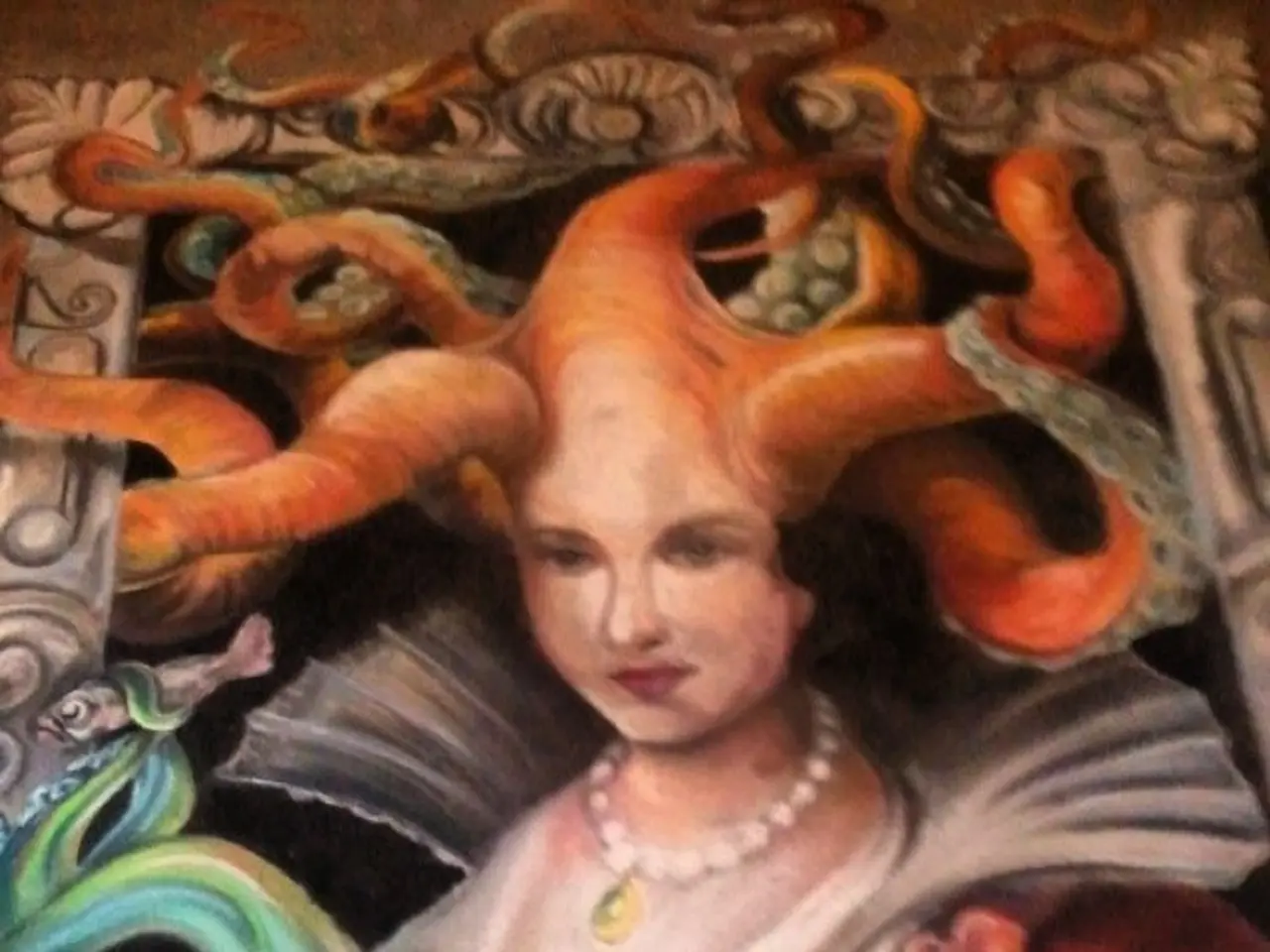
The Charm of Impressionist Artwork
In the heart of the 19th century, a revolutionary art movement emerged in France, challenging the status quo of traditional academic art. This movement was Impressionism, a groundbreaking development that continues to influence modern art today.
Impressionism, named derisively by critic Louis Leroy in 1877 as a mocking description of Claude Monet's and his peers' style, was characterised by its focus on capturing the fleeting effects of light and atmosphere. This emphasis on the transient nature of visual perception led to a focus on loose brushwork, a bright, vibrant colour palette, and broken brushwork, all of which allowed artists to convey a sense of immediacy and spontaneity in their work.
The use of colour in Impressionist paintings was not just a mere aesthetic choice; it played a significant role in the movement's ethos. By using a vibrant palette, Impressionist artists were able to convey a sense of movement and energy in their paintings. This innovative approach to colour had a lasting impact on subsequent developments in art history, inspiring new approaches to composition and technique.
Moreover, the Impressionists chose to focus on everyday subjects, such as landscapes, cityscapes, and scenes of contemporary life. This shift away from traditional subjects had a profound impact on modern art, as artists began to explore new ways of depicting contemporary life.
The legacy of Impressionism can be seen in many aspects of modern art. Its influence can be traced in subsequent movements such as Post-Impressionism, Fauvism, and Expressionism. Furthermore, the focus on capturing light and atmosphere continues to be a central theme in contemporary art.
Impressionist art can be found in museums and galleries around the world, with renowned collections at the Museé d'Orsay in Paris, the Metropolitan Museum of Art in New York, and the National Gallery in London. Some of the key Impressionist artists include Claude Monet, Pierre-Auguste Renoir, Edgar Degas, Camille Pissarro, and Berthe Morisot.
In conclusion, Impressionism was a transformative art movement that left an indelible mark on art history. Its focus on capturing light and atmosphere, its innovative use of colour, and its emphasis on everyday subjects continue to influence modern art, making it a cornerstone of artistic expression.