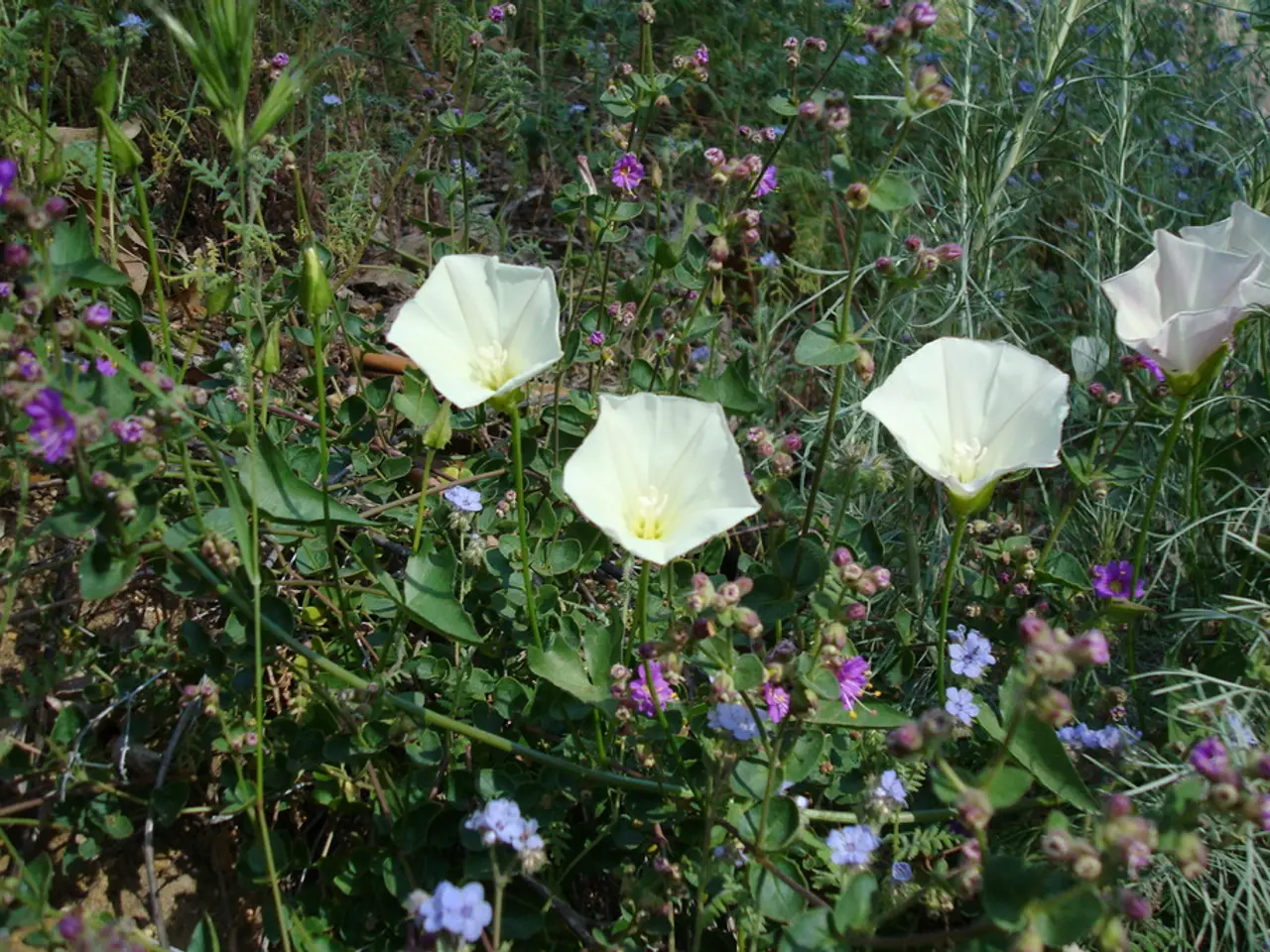
Steer Clear of These 5 Intrusive Ground Covers Absolutely! Opt for a Striking Native Alternative Instead
In a bid to preserve local ecosystems and promote biodiversity, the focus in Germany is shifting towards native wild perennials and low-maintenance, non-invasive plants as alternatives to invasive ground covers. These native plants not only offer a beautiful addition to your garden but also provide food and shelter for native pollinators and other wildlife.
Laura Walters, the content editor of this article, highlights the importance of making informed choices when it comes to ground cover plants. She suggests that native plants, such as the Golden star (Chrysogonum virginianum) with its star-shaped blossoms in brilliant yellow, are an excellent choice.
Another native ground cover that is a good alternative to vinca vines is the Hearst Ranch buckbrush (Ceanothus hearstiorum), with similar growth habits and blue flowers.
One of the invasive ground covers to avoid is the Common periwinkle (Vinca minor), with its glossy evergreen leaves and blue flowers. This plant, while popular, can be difficult to control and can choke out native plants when it moves into natural areas.
Another invasive vine to steer clear of is English ivy (Hedera helix). While it may seem appealing with its evergreen leaves, it spreads quickly and can smother surrounding vegetation.
Wintercreeper (Euonymus fortunei) is another invasive vine to watch out for. It has variegated leaves, white spring flowers, and red berries in autumn, but it is hard to control and can crowd out native flowers and smother trees.
Kudzu (Pueraria montana), an invasive vine from Asia, is another threat to local ecosystems. It grows rapidly and covers large areas, killing trees, shrubs, and native wildflowers.
Teo Spengler, a master gardener and docent at the San Francisco Botanical Garden, suggests native alternatives to these invasive plants. For instance, Wintergreen (Gaultheria procumbens) is a native plant that makes an appealing ground cover for shady locations, growing to 6 inches tall and producing scarlet berries during winter.
Bearberry (Arctostaphylos uva-ursi) is another native ground cover with attractive, leathery evergreen leaves and berry-like fruit that lasts into winter. Wild ginger (Asarum canadense) is a native alternative to English ivy, with lovely heart-shaped leaves and best growth in shade.
Native plants are not only beneficial for the environment, but they are also effective at preventing weed growth, erosion damage, and are drought tolerant. Choosing native ground cover plants results in a low-maintenance landscape.
In conclusion, by opting for native ground covers, you can create a beautiful, sustainable garden that supports local ecosystems and requires minimal maintenance.
Read also:
- Peptide YY (PYY): Exploring its Role in Appetite Suppression, Intestinal Health, and Cognitive Links
- Toddler Health: Rotavirus Signs, Origins, and Potential Complications
- Digestive issues and heart discomfort: Root causes and associated health conditions
- House Infernos: Deadly Hazards Surpassing the Flames