Sky-Soaring Wonders: Exploring Aviators of Nature - Uncovering the Remarkable Evolution of Flying Creatures and Their Astonishing Traits
In the realm of flight, nature has crafted a diverse array of aviators, each with their unique adaptations and remarkable abilities. From the smallest of insects to the majestic birds of prey, let's embark on a journey to explore the wonders of flight.
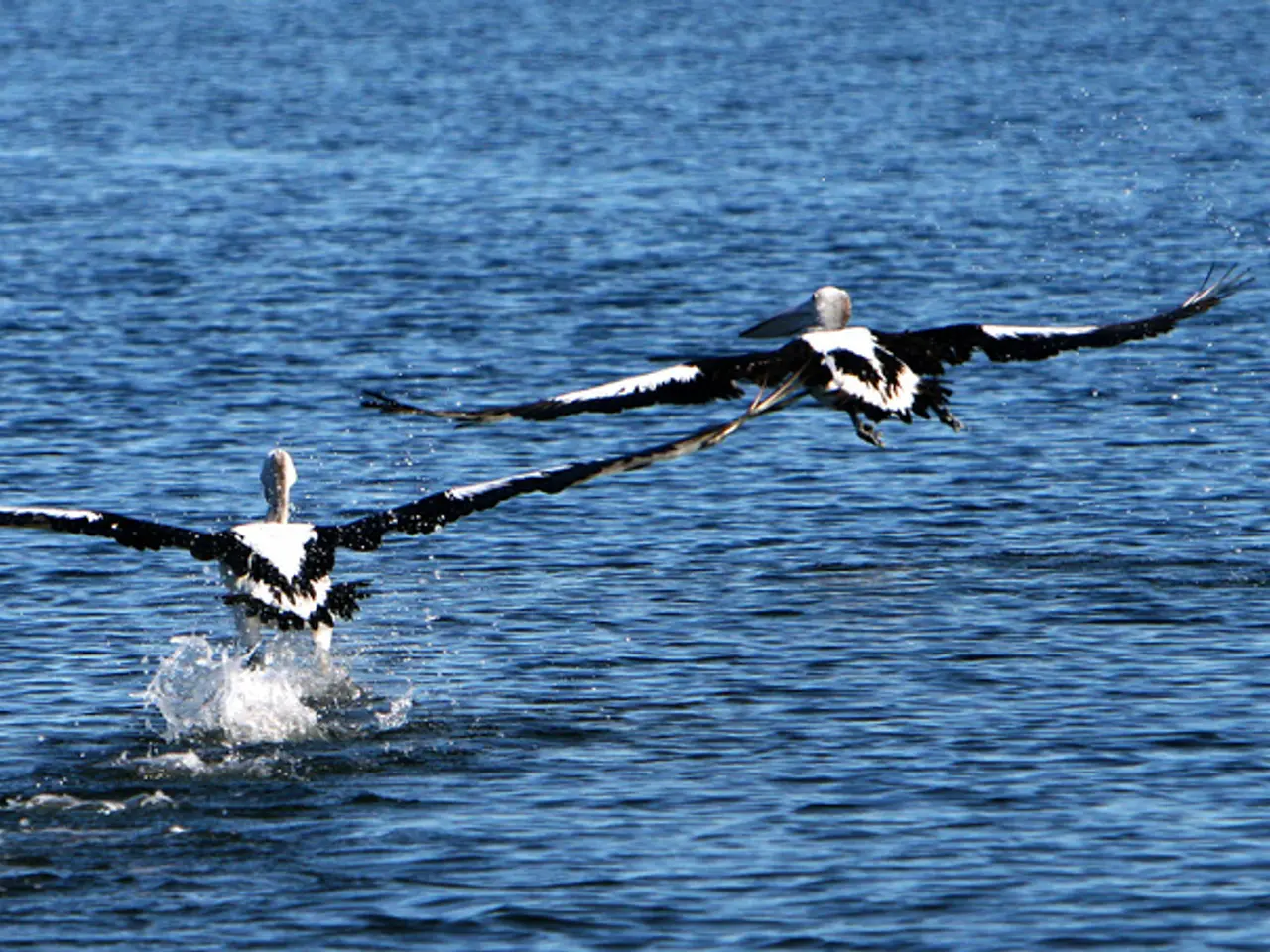
Pterosaurs, the first vertebrates to achieve powered flight, ruled the skies during the age of the dinosaurs. Fast forward to the present day, and birds (Class: Aves) are the most familiar flying animals, their streamlined bodies and feathers providing the essential lift for powered flight.
Insects (Class: Insecta), the first animals to take to the skies, were the pioneers of flight, appearing over 300 million years ago. Their tiny bodies flutter with wings beating hundreds of times per second, enabling them to navigate through the air with astonishing agility.
Bats (Order: Chiroptera), the only mammals capable of sustained flight, have modified forelimbs with a thin membrane of skin (patagium) that functions as their wings. They use echolocation for navigation and have exceptional control over their wing shape and movement. Flying foxes, the largest bats, rely on sight rather than echolocation, with wingspans that can exceed 5 feet (1.5 meters).
The wandering albatross holds the record for the longest wingspan of any living bird, up to 12 feet (3.6 meters), allowing it to glide over oceans for hours without flapping. On the other hand, hummingbirds can hover in place and fly backward, with their wings beating up to 80 times per second.
The cheetah, an animal that has garnered much attention in recent years, is not a flyer but moves with extraordinary speed on the ground.
Gliding animals, such as flying squirrels and gliding lizards, travel through the air without flapping wings, but their adaptations allow them to travel significant distances between trees or cliffs. One such example is the Flying Dragon (Draco lizard) which glides between trees using elongated ribs with skin flaps.
Monarch butterflies are famous for their long-distance migrations across North America, traveling over 3,000 miles during their annual migration. The bumblebee bat (Craseonycteris thonglongyai), one of the smallest mammals in the world, weighing less than a penny, also undertakes impressive journeys.
Conservation efforts are crucial to protect these flying wonders from the threats posed by human activities such as habitat loss, climate change, pollution, light pollution, wind turbines, and glass buildings. Measures like creating wildlife corridors, protecting critical habitats, and using bird-safe architectural designs are essential in ensuring the survival of these awe-inspiring creatures.
From the rapid wing beats of insects to the high-speed dives of the peregrine falcon, the world of flight is a spectacle of nature's ingenuity. Each species, with its unique adaptations, offers a testament to the beauty and complexity of life on Earth.
Read also:
- Peptide YY (PYY): Exploring its Role in Appetite Suppression, Intestinal Health, and Cognitive Links
- Toddler Health: Rotavirus Signs, Origins, and Potential Complications
- Digestive issues and heart discomfort: Root causes and associated health conditions
- House Infernos: Deadly Hazards Surpassing the Flames