Severe drought persisting for five years signifies an inevitable opinion for British farmers: 'Climate change is tangible and impacting us immediately'
In recent times, the effects of climate change on agriculture and water resources have become increasingly apparent in Britain. According to Prof. Nicola Cannon of the Royal Agriculture University, climate change is already impacting farmers across the nation.
A dairy farmer in the Derbyshire Peak District has recorded the lowest rainfall in 24 years, resulting in a significant drop in milk yield. The farmer reported a decrease of almost 10% in July, highlighting the immediate consequences of the dry weather.
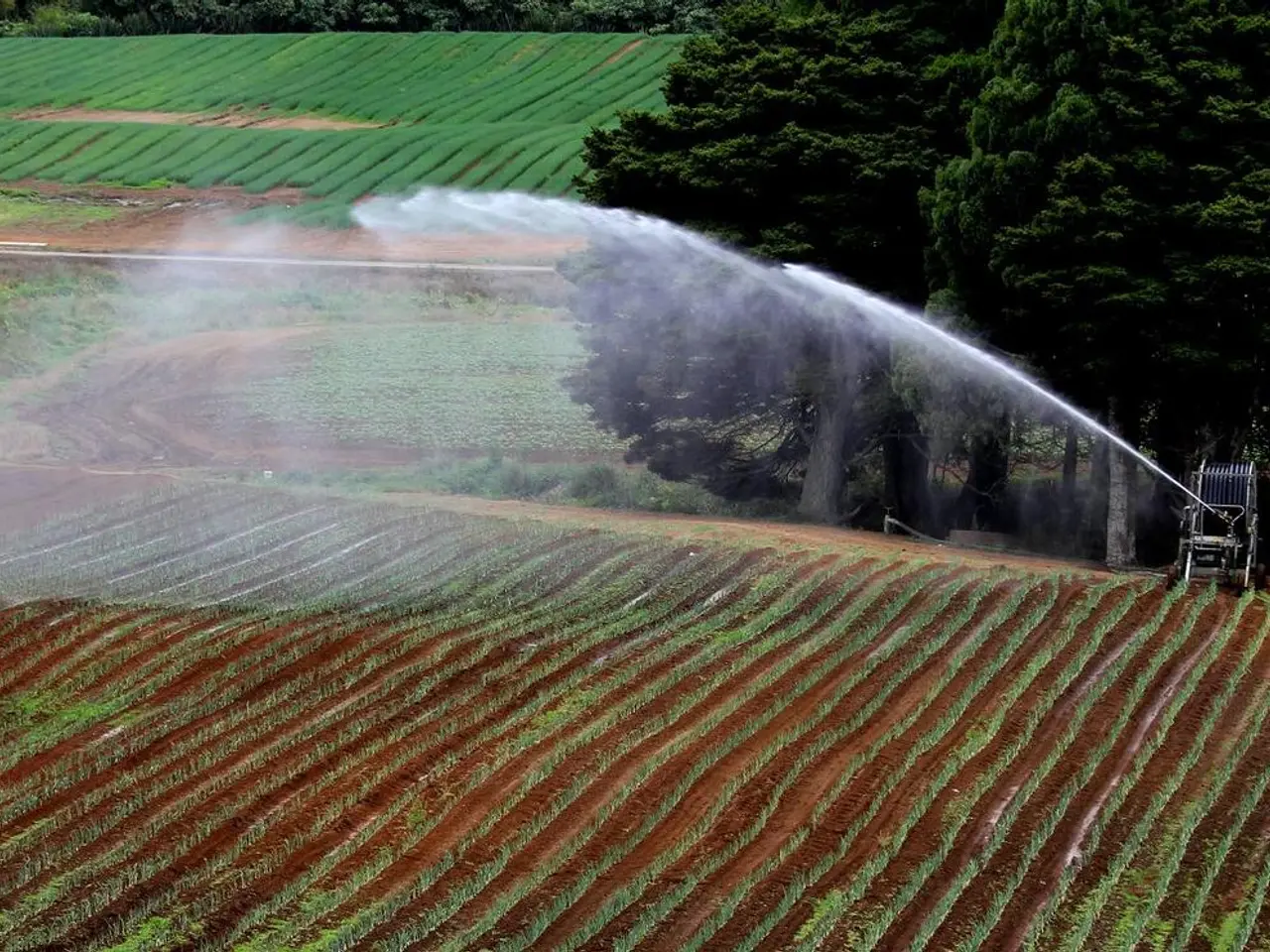
The water crisis has extended beyond agriculture, with water companies in Yorkshire, the Thames, South East, and Southern regions applying postcode-specific hosepipe bans due to dwindling water levels.
Electricity generation is the largest water consumer in the country, and researchers at Oxford University suggest that transitioning to renewable energy sources such as wind and solar could reduce water withdrawals by up to 50% by 2030.
However, the current situation has revealed shortcomings in the regulatory system. The Cunliffe Report has declared Ofwat, the water-company regulator, as unsatisfactory in its role of regulating water companies in the United Kingdom.
The agricultural sector has been hit hard, with the pea harvest in the East of England suffering significant losses. On average, farmers have been finding only five peas in a pod instead of the usual eight or nine. The early harvest has also resulted in lower yields for cereals, potatoes, and sugar beet.
Brassica growth in the same region has been stunted, while only spring barley has delivered consistently good yields, thanks to early rain followed by sunshine.
The National Bee Unit has issued a starvation alert, advising beekeepers to check colonies and feed syrup if necessary. Meanwhile, a hay merchant in Monmouthshire reports a 45%-50% decrease in hay crops, with the price for small bales of hay expected to rise from £5 to £7 each.
Regional differences in water levels are evident, with some areas like Exmoor still having lush grass and comfortable water levels in reservoirs. However, the National Drought Group has declared the lack of rain a 'nationally significant incident' in England and added south-east Wales to the list of drought-affected areas.
Jane Wheatley, a former staff editor and writer at The Times, contributes to our platform and The Sydney Morning Herald among other publications. She underscores the gravity of the situation, stating, "The crisis is a stark reminder of our reliance on water and the urgent need for sustainable practices and effective regulation."
As Britain grapples with this water crisis, it is evident that climate change and inadequate regulation are taking a toll on the country's agriculture and water resources. The need for immediate action and long-term strategies to address these issues cannot be overstated.
Read also:
- Peptide YY (PYY): Exploring its Role in Appetite Suppression, Intestinal Health, and Cognitive Links
- Toddler Health: Rotavirus Signs, Origins, and Potential Complications
- Digestive issues and heart discomfort: Root causes and associated health conditions
- House Infernos: Deadly Hazards Surpassing the Flames