Regular airplane-bird collisions: What is the frequency of such incidents?
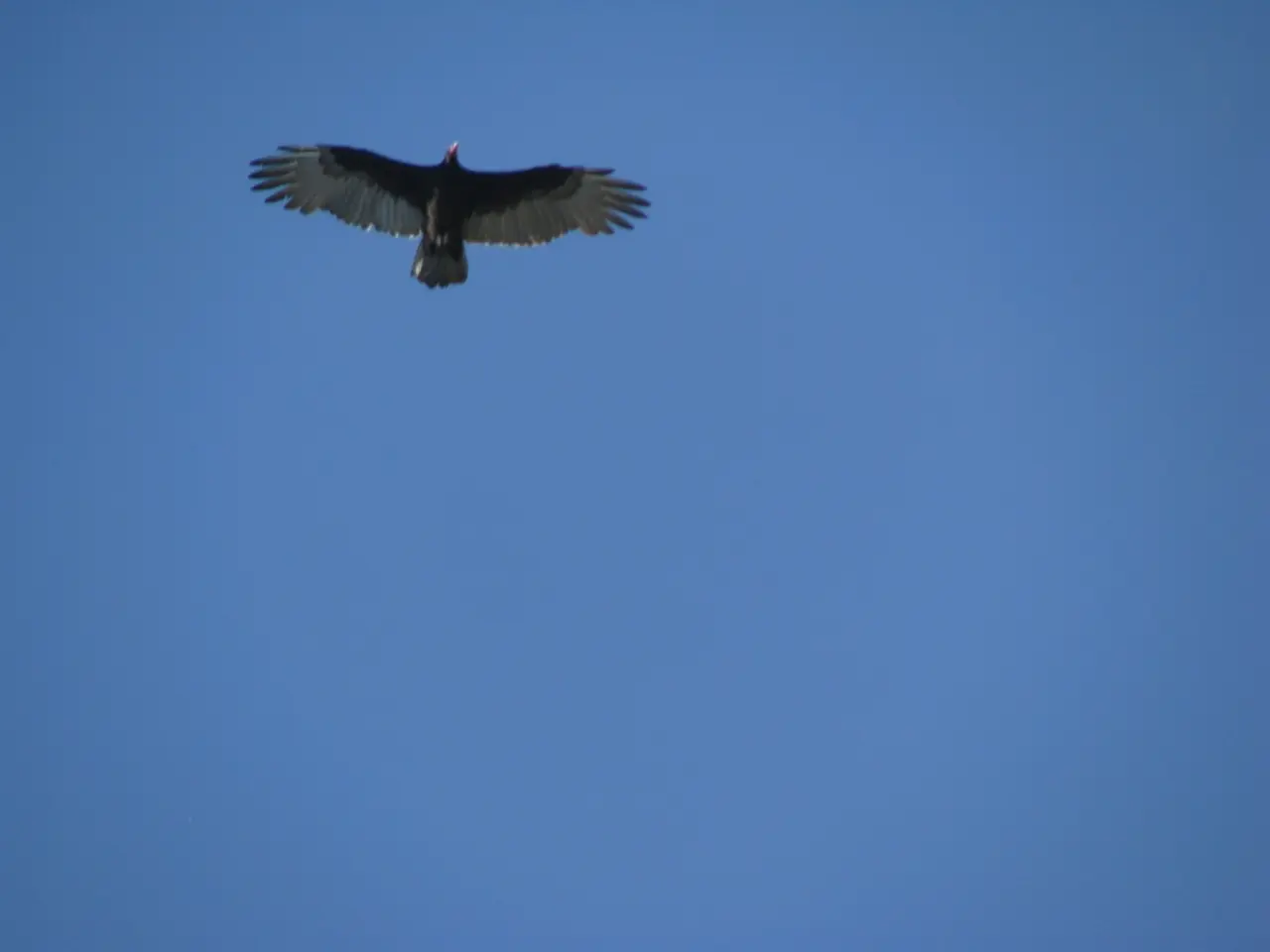
In the skies above, a persistent threat looms for commercial airplanes - bird collisions. These incidents, known as "bird strikes," have been a concern for the aviation industry for years, with nearly 98,000 reported cases between 2008 and 2015 by the International Civil Aviation Organization (ICAO).
During the certification process of commercial airplanes, rigorous tests are conducted, including launching objects of weight and mass similar to a medium-sized bird against the most exposed areas. These tests aim to ensure the aircraft's resilience, but commercial airplanes are resistant, not immune, to bird impacts on windshields, leading edges, and engines.
The consequences of a bird impact can be severe. After such an incident, the aircraft must be immediately removed from service for possible damage examination, which can incur direct and indirect costs for the airline. Furthermore, victims or injuries due to bird impact can occur, although most cases go unnoticed.
One of the most infamous bird strike incidents occurred on January 15, 2009, when an Airbus A320 US Airways was forced to land on the Hudson River after a flock of birds disabled the two engines during takeoff. Known as the "miracle of Hudson," 150 passengers and 5 crew members were saved by the expertise of commander Chesley "Sully" Sullenberger and co-pilot Jeff Skiles.
In an effort to reduce the risk of bird collisions, some airports have resorted to controversial methods such as slaughtering geese with gas or shooting in the air with a gun. However, a recent development offers a more humane and effective solution.
A study published in the PeerJ magazine has shown that red and blue LED lights can scare away birds effectively and keep them flying in the opposite direction. This groundbreaking research was conducted by Rebecca K. Smith and colleagues.
The study found that ultraviolet (UV), green, and white light were indifferent to thrushes. In contrast, when exposed to red and blue LED lights, the thrushes avoided following routes illuminated with these colours. This new method does not involve the use of harmful chemicals or dangerous animals.
The use of red and blue LED lights as a preventive strategy for bird collisions is a promising development. If implemented at various airports, this innovative solution could significantly reduce the risk of bird strikes and contribute to the safety of air travel. The estimated annual cost of bird impacts on aviation is over $1,000 million dollars, according to the European Space Agency. Therefore, the potential cost savings are substantial.
As the aviation industry continues to evolve, the implementation of red and blue LED lights could mark a significant step forward in ensuring the safety of passengers and reducing the financial burden of bird strikes. The "miracle of Hudson" serves as a stark reminder of the potential dangers of bird collisions, and the development of this new method offers hope for a safer future in the skies above.
Read also:
- Peptide YY (PYY): Exploring its Role in Appetite Suppression, Intestinal Health, and Cognitive Links
- Toddler Health: Rotavirus Signs, Origins, and Potential Complications
- Digestive issues and heart discomfort: Root causes and associated health conditions
- House Infernos: Deadly Hazards Surpassing the Flames