Puzzling Phenomenon: The Origin of Pumpkin Carving During Halloween Celebrations
In the realm of All Hallows' Eve, the chilling festivities that envelop us every October 31st, there lies a rich tapestry of ancient traditions. This article delves into the roots of Halloween, tracing its origins back to the Celtic festival of Samhain and beyond.
Samhain, marking the end of the harvest season and the advent of winter, was a significant event in the Celtic calendar. It was a time for feasting, drinking, and preparing for the cold months ahead, including the slaughter of animals and preservation of their meat. Revellers wore costumes and daubed their faces with ashes to avoid recognition by spirits.
One of the most intriguing aspects of Samhain was the belief that the ghosts of dead family members would visit during this time. To ward off these spirits, the tradition of 'souling' was practiced, where good men and women would buy bread and give it as Alms for the souls they loved, during All Saints' and Souls' Days. Small round biscuit-like cakes, known as soul-cakes, were given as part of this tradition.
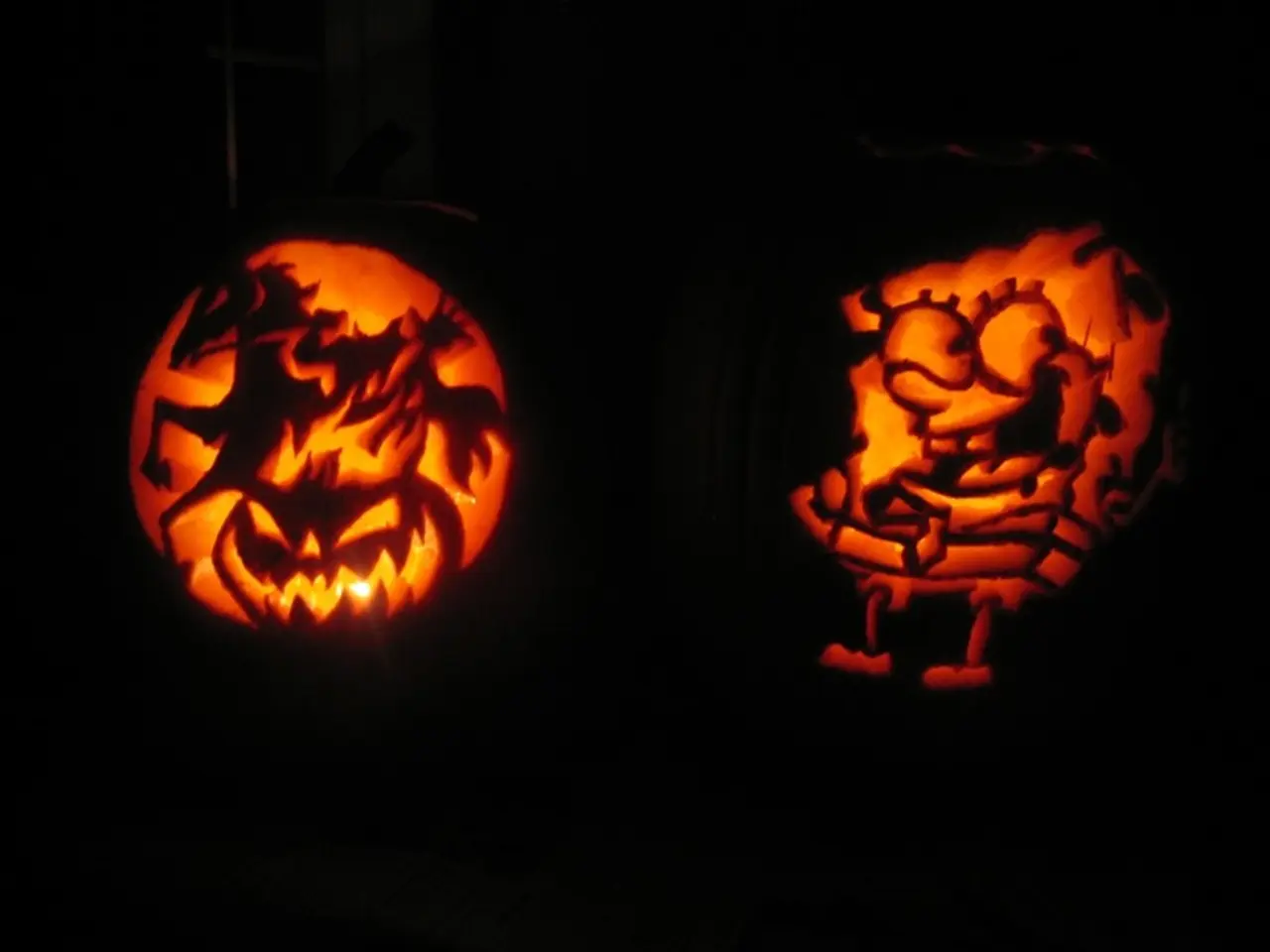
The tradition of carving pumpkins for Halloween has been practiced for centuries. Originally, the Irish carved turnips, mangelwurzels, and other vegetables for Halloween lanterns to ward off spirits during the ancient Celtic festival of Samhain. However, pumpkins found their way to Britain and became popular for carving due to their ease of use. With their larger size, softer flesh, and hard exterior, they were discovered by Irish migrants in America and were easier to carve.
The traditional Jack-o'-Lantern originated in Ireland, where people originally carved lanterns from turnips or other root vegetables to ward off spirits. The term 'Jack of the Lantern' is often associated with Halloween due to the Irish folklore character Stingy Jack. This mischievous character played tricks on the Devil and was condemned to roam the world with a lantern carved from a turnip, carrying a red-hot ember as a light. Jack of the Lantern, another name for Stingy Jack, is often seen as a symbol of Halloween.
Halloween with its ghoulish costumes, trick-or-treating, and pumpkin lanterns has roots in these ancient practices. As the years passed, the festival evolved, influenced by various cultures and religions. Pope Gregory III expanded All Martyrs' Day to include all saints, and the date was later moved to November 1, becoming All Saints' Day. Pope Boniface IV established a day to commemorate all the church's martyrs, All Martyrs' Day, on May 13.
Today, Halloween continues to captivate us with its eerie charm, reminding us of the rich history that lies beneath its ghoulish surface. Martin Fone, a retired financial services professional who writes about quirks and oddities of life, sheds light on these fascinating origins in his latest book, "More Curious Questions". So, as we light our pumpkin lanterns and don our costumes, let us not forget the ancient traditions that have shaped this enchanting celebration.
Read also:
- Cheese consumption leads to fatalities for two individuals.
- AI's looming shadow on Mexican small-scale enterprises: how purpose-driven communities can offer salvation
- Europe's Famous Hiking Spot Showcases Breathtaking Mountain Scenery
- Daily Dietary Delight: Uncovering the Impact of Consuming Superfood Tomatoes Each Day