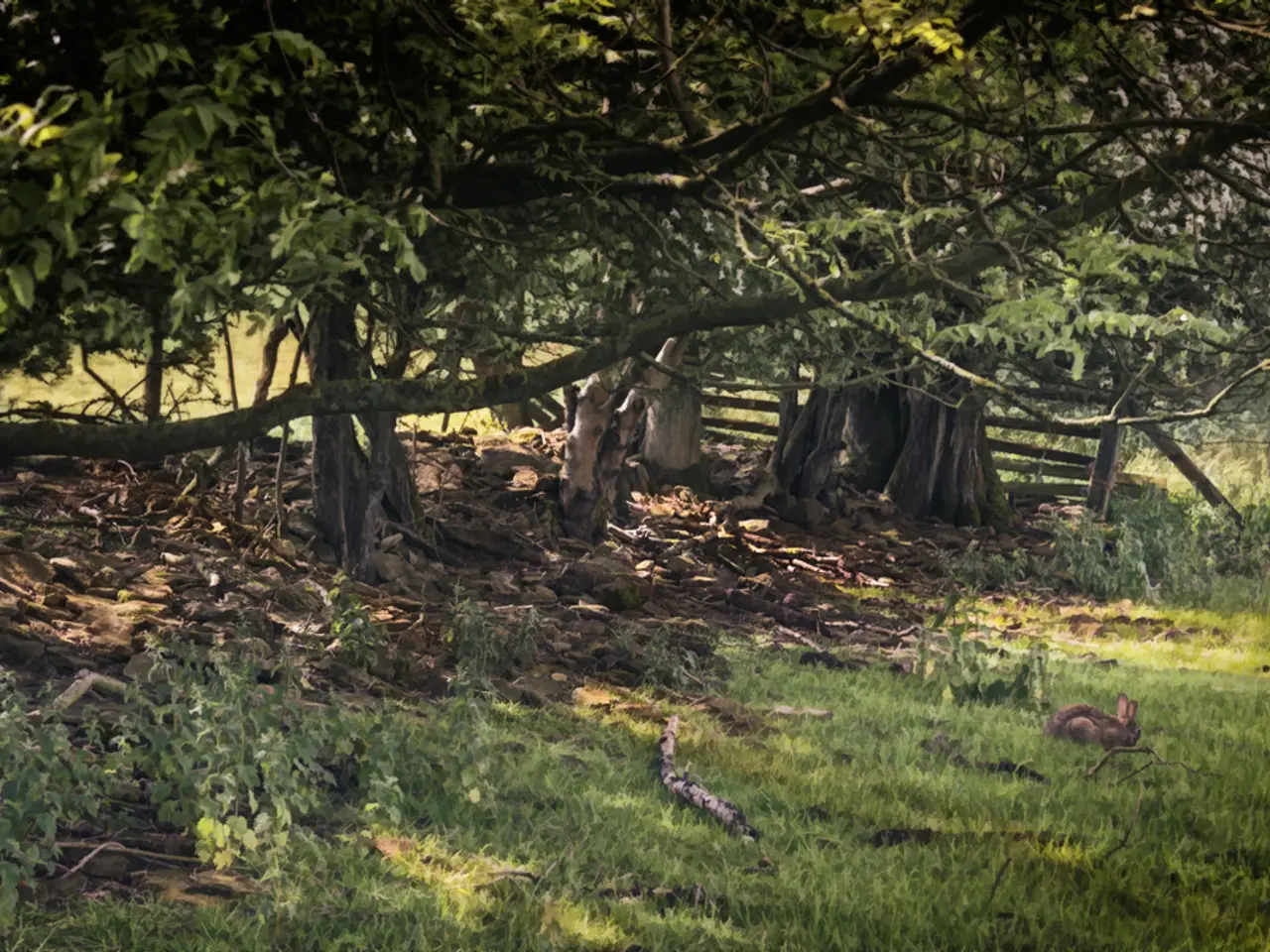
"North-west Scotland's Inverewe transforms into 'The Oasis of the North': A resilient gardening feat amidst the windy corners"
The National Trust for Scotland's garden at Inverewe, nestled on the shores of Loch Ewe in Wester Ross, is a testament to the power of resilience and innovation. Established in 1862 by Osgood Mackenzie, the garden was his vision to secure his financial future on a seemingly unpromising 2,000-acre estate.
Inverewe, part of the temperate rainforest of the west of Scotland, experiences a unique climate. Spring can bring dry periods lasting weeks, followed by torrential rain that can last for days. This unpredictable weather, coupled with an increase of 6 inches in rainfall since 1960, presents challenges for the garden. However, it also fosters the growth of ferns, lichens, liverworts, mosses, and a diverse array of plant life.
One of the garden's most striking features is the variegated turquoise oak, Quercus cerris 'Argenteovariegata'. Dozens of lichen species thrive on its spreading limbs, a spectacle that draws visitors from far and wide.
To combat the nutrient leaching caused by the intense rainfall and ensure the health of the soil, the garden employs a variety of methods. Composting, done professionally with large volumes of high-quality material produced within six months, is a key strategy. The composting area receives woody and herbaceous waste, seaweed, and even recycled items like bamboo cutlery, paper cups, and plates.
The composting process kills off weed seeds and harmful diseases and pathogens, providing a clean and nutrient-rich material for the garden. Biochar, a premium-quality charcoal created without oxygen in an Exeter retort, is also added to the compost as a soil improver. It helps to neutralize acidity, improve water and nutrient retention, aerate, and offer habitats for microbes.
Winter storms, with their far-reaching effects such as bringing down trees and opening up areas to the wind, are a constant challenge. However, the gardeners at Inverewe are proactive in their approach. They save cones from fallen pines, genetic material from species rhododendrons, and propagate rhododendrons to replenish the aging shelterbelt.
Supercharged composting and mulching help to keep replenishing and protecting the soil at Inverewe. The warm, moist air at the garden also aids in the growth of its rhododendron collection, despite the arid spells that can affect them during spring and summer.
Under the guidance of head gardener Kevin Ball since 2006, Inverewe continues to thrive and evolve. Mackenzie's original vision of a magnificent and varied garden of exotic species from around the world lives on, a testament to the power of perseverance and the beauty of nature.
Read also:
- Peptide YY (PYY): Exploring its Role in Appetite Suppression, Intestinal Health, and Cognitive Links
- Toddler Health: Rotavirus Signs, Origins, and Potential Complications
- Digestive issues and heart discomfort: Root causes and associated health conditions
- House Infernos: Deadly Hazards Surpassing the Flames