Kazakhstan accelerates gas infrastructure with pipelines and import deals
**Prime Minister of Kazakhstan Olzhas Bektenov tasked the acceleration of gas processing plant construction and completion of key oil and gas projects at the Tengiz field during a government meeting, as reported by our website citing the press service of the Cabinet of Ministers.**
"In the oil and gas sector, it is necessary to complete the full launch of the future expansion project and the wellhead pressure management project at the Tengiz field. I also task the acceleration of the current projects for the construction of gas processing plants," Olzhas Bektenov emphasized.
Later, during a press conference, the Prime Minister reported that, as part of the implementation of the President's instruction to ensure full gasification of the country, the Government is considering various options, including using its own gas resources and importing gas from neighboring countries.
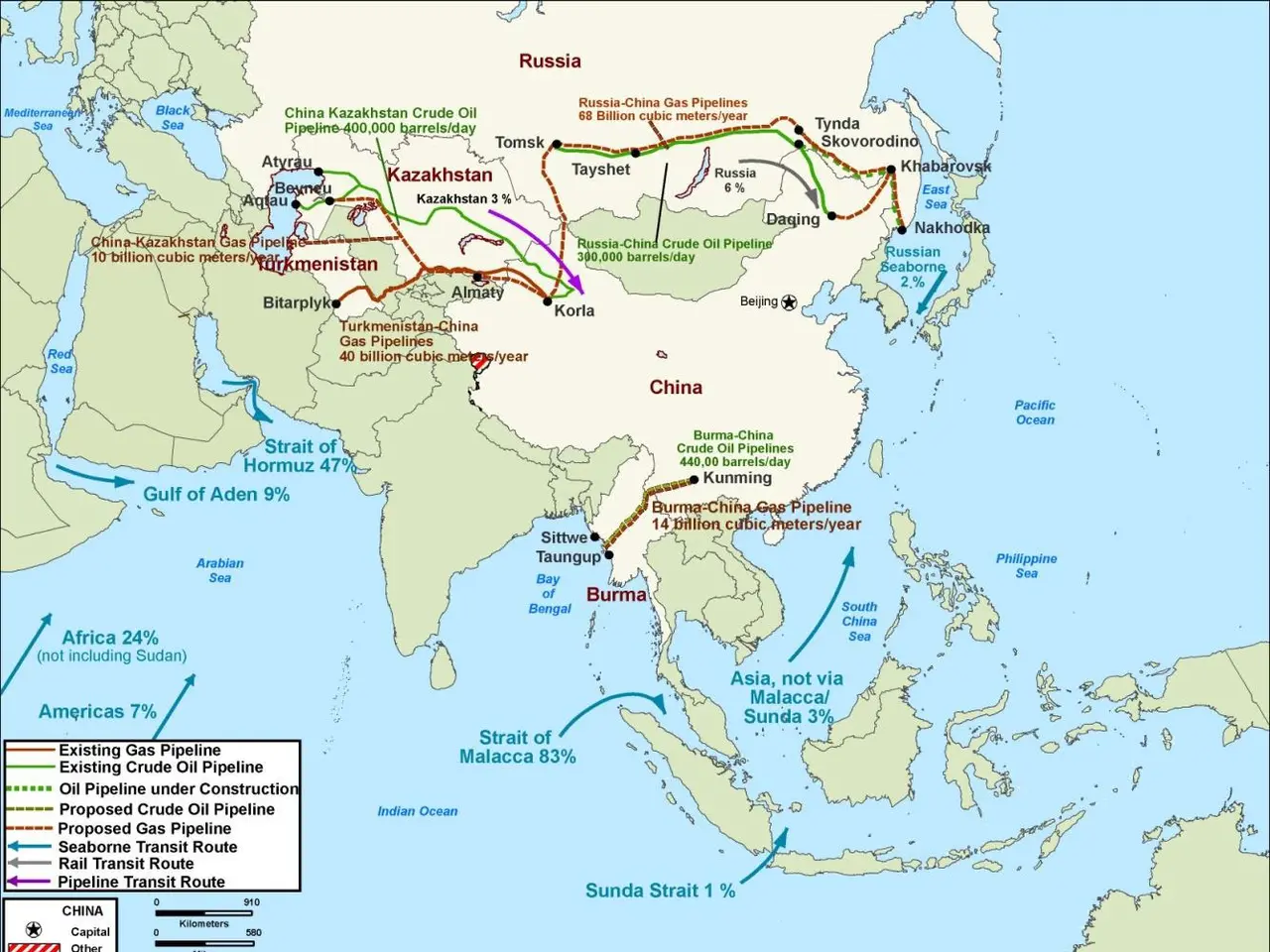
For the gasification of Akmola and North Kazakhstan regions, the continuation of the construction of the second, third, and fourth stages of the Saryarka main gas pipeline is planned. For the implementation of this project, the construction of the second line of the Beineu - Bozoy - Shymkent pipeline with a capacity of 15 billion cubic meters per year is planned.
Currently, construction and installation work has begun on the first stage, which involves the construction of a linear section of the gas pipeline with a capacity of up to 10 billion cubic meters per year and a length of 1,450 kilometers with three new compressor stations. The completion is scheduled for 2026.
Additionally, the Government is conducting negotiations with potential investors for the import of gas from neighboring countries for the northern and eastern regions.
Bektenov emphasized that the further development of the gas industry is impossible without the formation of a balanced and economically justified tariff policy. "The prices for gas on our internal market are significantly lower than the world prices, therefore, we will gradually move towards an increase in order to create a normal, undistorted situation. Then the gas industry will become investment-attractive and will develop," he explained.
Read also:
- Ignorant Youth Unfamiliar with Quebec's Cultural Landscape
- PCOS-related Gas Buildup: Explanation, Control Strategies, and Further Insights
- Astral Lore and Celestial Arrangements: Defining Terms & In-Depth Insights - Historical Accounts & Glossary of Cosmic Mythology
- "Rural Idyls with Supercars: Astonishing Sites Where Residents Cruise McLarens and Ferraris for Groceries"