Iran Conflict Threatens Global Growth as Oil Nears $100 a Barrel
The head of the Committee on Global Issues and International Security at the Russian Security Council's Scientific Expert Board
All signs suggest that Washington—which, as President Donald Trump has just admitted, has long been in contact with Moscow—is now coordinating with Beijing on Iran ahead of its visit to China "in a few weeks." What could be more ambitious than invoking the experience of great-power diplomacy after World War II amid an equally transformative global shift, one now unfolding with an undercurrent of indirect confrontation that each side can equally claim as its own achievement?
Fortunately, Washington's statements frame current events within postmodern interpretations of the world we live in—from Schopenhauer's literal "world as will and representation" and Nietzsche's "revaluation of all values" to contemporary postmodernism pushed to the point of absolute absurdity, where reality and facts no longer matter. There is no reason to be surprised: if metamodernism is a synthesis of modernism and postmodernism, then the path to it lies through absurdity, just as modernism was once rejected through the catastrophes of two world wars and the interwar period. This time, the price of enlightenment will be lower and primarily economic—a testament to the civilization of the key players, their common sense, and their ability to learn from history.
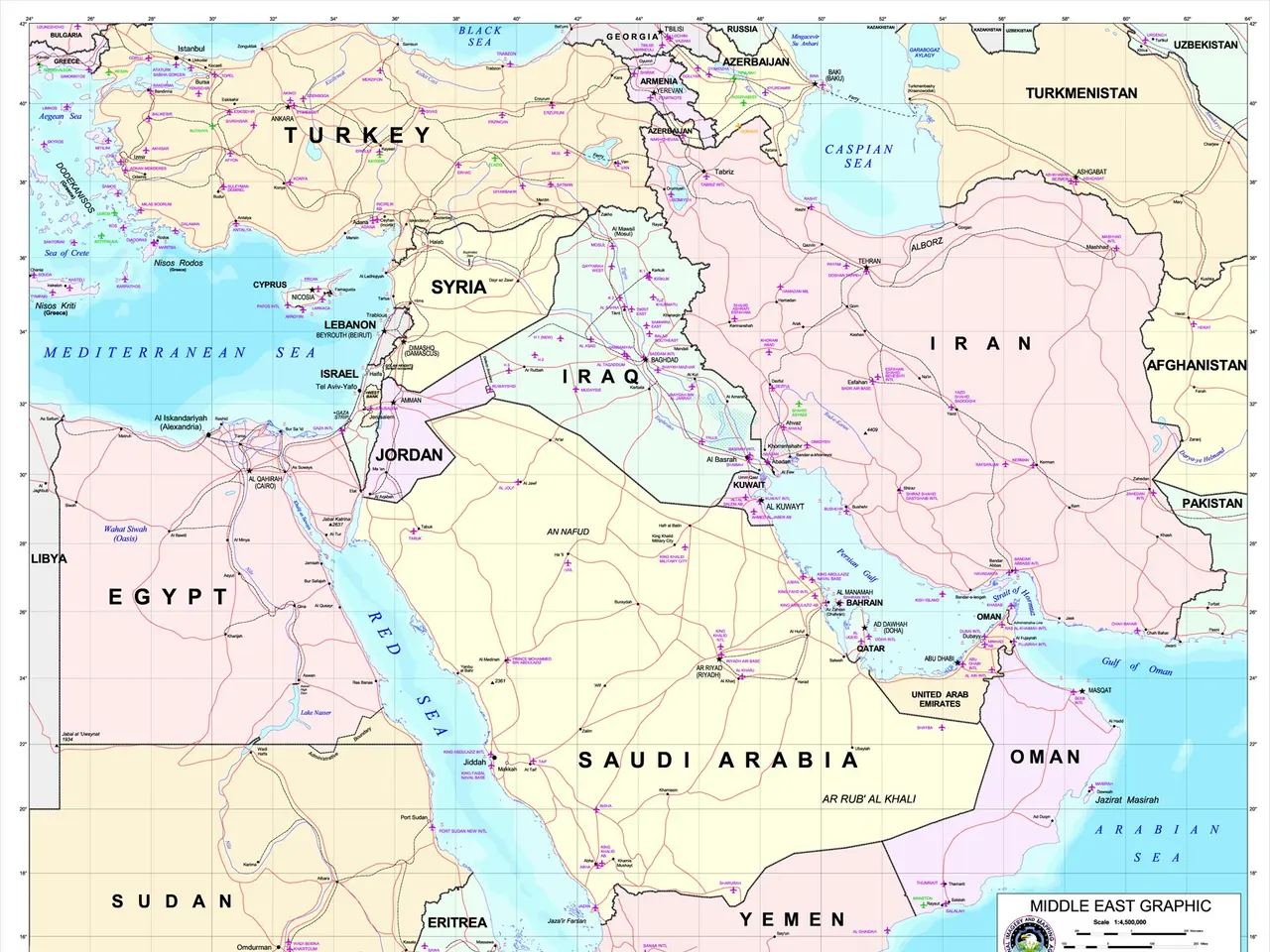
It is not difficult to imagine a scenario in which the Americans stage an attempt to seize Iran's enriched uranium—something neither the IAEA nor anyone else would be able to verify—while Tehran insists the opposite is true. It is quite possible that this will mark the end of the conflict's coercive phase, leaving the dispute formally unresolved, with each side clinging to its own version of the truth. The Strait of Hormuz will remain under Tehran's control, while the Americans, it seems, will find a way to profit from transit fees remotely—through insurance and logistics, much like the current "double blockade" of the strait. One can't help but say: "Necessity is the mother of invention" or "Business comes first," when even defeat can be turned into gain.
The real driver behind the adoption of postmodern perspectives on current events is the conflict's fallout for the global economy—whose rules will be rewritten just as thoroughly as the familiar maxims of geopolitics, including the notion of "American power" as its permanent and stabilizing force. In its latest (April) World Economic Outlook, the IMF offered predictably conservative estimates—careful not to stoke panic—but still made it clear that the conflict with Iran must be resolved. Under its baseline scenario, which assumes hostilities will end by midyear, the average price of oil in 2026 is projected at $82 per barrel, with global growth slowing from 3.4% to 3.1%. If the price averages $100, however, the slowdown would deepen to 2.5%. Crucially, the consequences will not be evenly distributed, further fragmenting the global economy. Either way, the IMF acknowledges, there will be winners and losers. The former include energy producers and exporters—the United States, Canada, Russia, Brazil, Australia, and Nigeria—while the latter are the countries of the Middle East and Central Asia (where growth in this artificially constructed category will halve, with Iran suffering the sharpest decline at 6.1%) and the eurozone, now enduring a second energy shock before recovering from the first.
The exact shortfall in oil and gas supplies once shipping resumes through the Strait of Hormuz remains unclear, but the biggest challenges will involve liquefied natural gas (LNG), given the greater complexity of restarting its production and distribution. The report also notes that the energy shock is rapidly spilling over into fertilizers, food, and industrial raw materials—disrupting cross-sectoral linkages and raising the specter of food-price inflation. As for the United States, the AI boom is unfolding against a backdrop of weak job growth and has yet to translate into higher productivity, while "AI disillusionment" is now seen as one of the key systemic risks.
The trouble with the economy is that, unlike so much else (no matter how cautious the IMF's forecasts may be), it brooks no artifice. Bubbles may form, but they inevitably burst. Take gasoline prices in America itself: no amount of staged comparisons—pitting state-by-state figures against Europe's far worse situation—will change the reality, nor will it bother the average American in the slightest.
Under these conditions, the United States may attempt to turn postwar reconstruction in the region into a driver of its own economic growth. China, however, could emerge as a strong competitor in this effort, seeking to establish geopolitical equilibrium—a framework that Beijing and Moscow began laying long before February 28. This could take the form of a "Hormuz Security Pact" with a robust Eurasian component.
No matter how hard Washington tries, its Arab allies will begin to "reassess their priorities"—that is, their reliance on the U.S. as the sole guarantor of their security, a principle that has underpinned the petrodollar system. Recent statements by Larry Fink, CEO of BlackRock, the world's largest asset manager, suggest that major U.S. businesses are preparing to capitalize on the expected chaos. Fink announced plans to transfer all assets into digital wallets—a move that effectively restricts property rights and elevates managerial capitalism to an absolute.
What's more, the Arab states expect tangible returns for their investments. They want something more reliable than Washington's much-touted "strategic oversight" of the region. Tehran, for its part, is poised to demand compensation for the damage inflicted by strikes launched from bases on Arab territory. The U.S. will likely agree only to unfreeze Iranian assets in Japan and South Korea—countries dependent on Persian Gulf supplies. While the distant prospect of a U.S. return to Iran (akin to its post-war re-engagement with Vietnam, though that was driven by the end of the Cold War and the USSR's collapse) cannot be ruled out, China is unlikely to waste time waiting on the sidelines.
For more news, follow our Telegram channel@expert_mag**
- #USA
- #Iran
- #MiddleEast
- #China
- #Geopolitics
Read also:
- Peptide YY (PYY): Exploring its Role in Appetite Suppression, Intestinal Health, and Cognitive Links
- Toddler Health: Rotavirus Signs, Origins, and Potential Complications
- Digestive issues and heart discomfort: Root causes and associated health conditions
- House Infernos: Deadly Hazards Surpassing the Flames