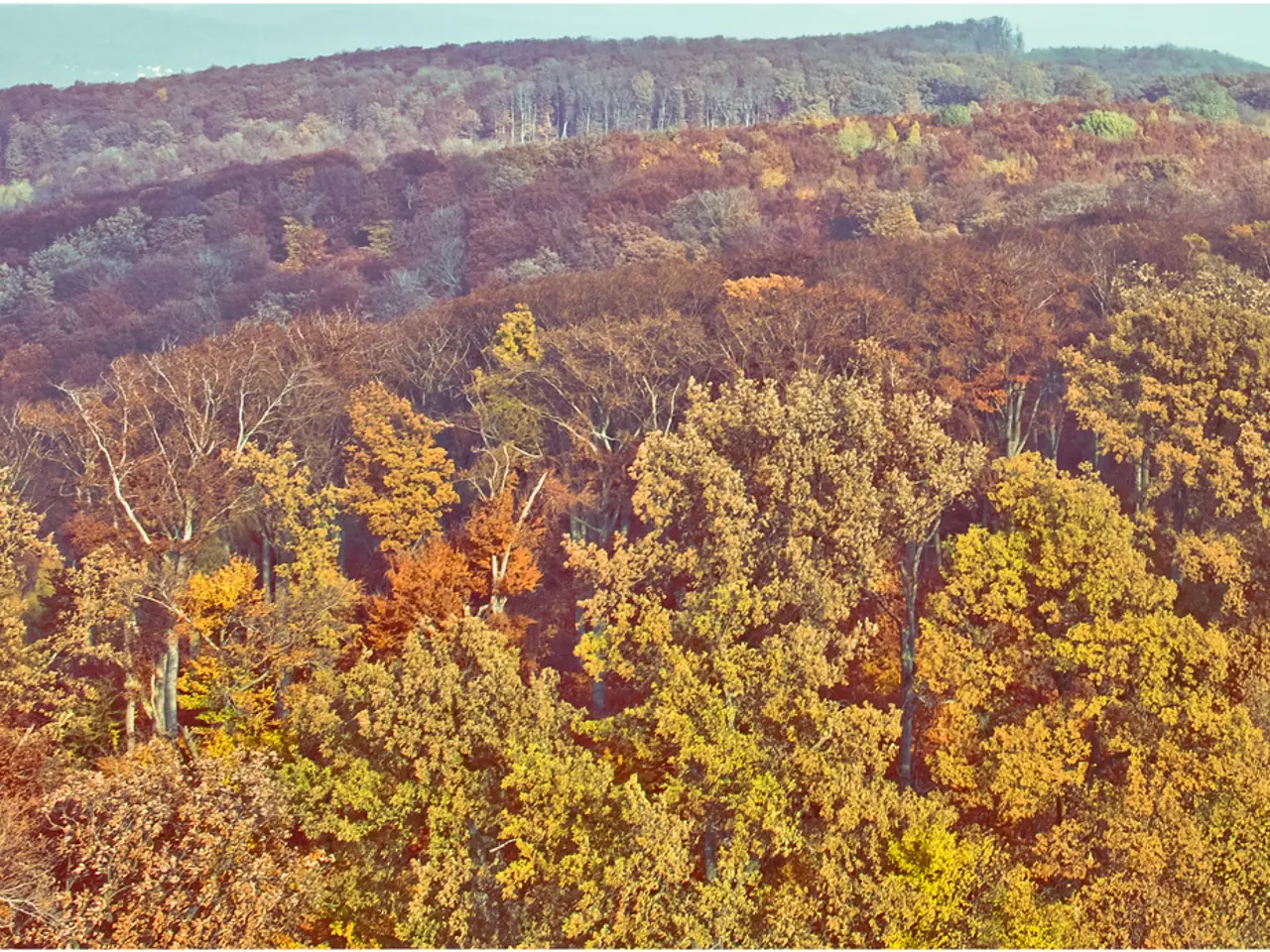
Honda Initiates Forestation of Hazelnut, Hickory, Maple, Oak, and Sycamore Trees in Ohio for Maple Syrup Production
In a commendable move towards environmental sustainability, Honda, the renowned automotive company, is making significant strides in reducing its carbon footprint and promoting eco-friendly practices.
The 'Honda Power of Dreams Forest' serves as a symbol of Honda's commitment to dreams that serve customers and strengthen society. The forest, spanning across 100 acres of land in Union County, Ohio, is home to 85,000 native trees, including Maple, Oak, Sycamore, Hickory, and Hazelnut. These trees, planted near Honda's Marysville Auto Plant, East Liberty Auto Plant, and Auto Development Center, are not only increasing carbon sequestration efforts but also improving riparian buffers and providing a habitat for various insects, animals, birds, and plants.
Honda's environmental efforts extend beyond its own land. The company is collaborating with a neighboring farm to develop a tree-based system focused on maple syrup production. This initiative aligns with the farm's existing agricultural activities and the environmental efforts Honda is promoting. The syrup produced will be made available for sale at a local farmers market.
Honda's dedication to sustainability also includes resource circulation. The company is making strides in reprocessing products back to raw materials and reusing those materials in the creation of new products, aiming for 100% sustainable materials.
Honda's efforts to offset CO emissions are evident in its long-term virtual power purchase agreements (VPPAs) for renewable wind and solar power. These initiatives seek to cover more than 60% of the electricity it uses in North America.
Looking to the future, Honda aims to make battery-electric and fuel cell electric vehicles represent 100% of auto sales in the U.S. and globally by 2040. The company's ultimate goal is zero environmental impact by 2050 through its "Triple Action to Zero" approach.
Anne Vogel, director of the Ohio Environmental Protection Agency, praised the project, stating that it advances Governor DeWine's commitment to enhance Ohio's natural resources and that the trees will act as a natural filtration system. Joel Agner, the tree-planting project leader, expressed that projects like this reflect what can be done at Honda.
Honda's commitment to environmentally responsible business practices extends to its suppliers and retail dealer partners across North America. The company is even exploring ways to make Maple and Hazelnut trees accessible to its associates for syrup and nut utilization.
Recently, Honda held a celebratory event at its Auto Development Center where associates and state officials had the opportunity to plant a tree, marking another milestone in Honda's journey towards a greener future.
Read also:
- Peptide YY (PYY): Exploring its Role in Appetite Suppression, Intestinal Health, and Cognitive Links
- Toddler Health: Rotavirus Signs, Origins, and Potential Complications
- Digestive issues and heart discomfort: Root causes and associated health conditions
- House Infernos: Deadly Hazards Surpassing the Flames