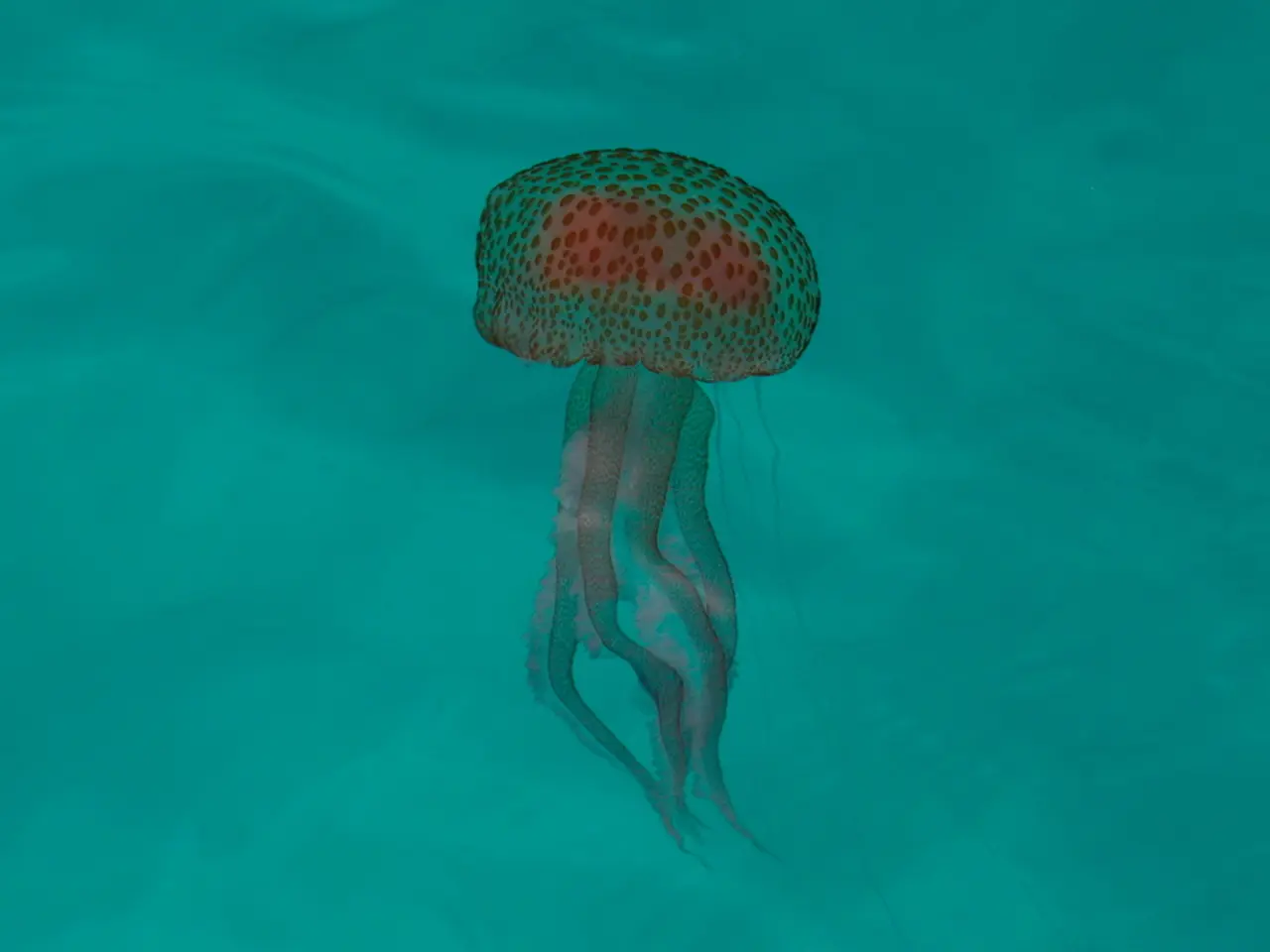
Giant marine invertebrate of 30 feet length identified by vacationers in Antarctica's near-surface waters.
In a remarkable discovery, tourists aboard a personal submersible vessel off the coast of Antarctica's Ronge Island encountered a giant phantom jellyfish, Stygiomedusa gigantea, in waters between 260 and 900 feet deep—a rare sighting for this deep-water species.
The creature, larger than the tourists' submersible, was approximately 30 feet long with four billowing arms and a domed head. This sighting marks a significant departure from the usual habitat of the giant phantom jellyfish, which are typically found at nearly 22,000 feet.
Antarctic waters below 160 feet have been largely unexplored due to their difficulty and expense to reach. The use of personal submersibles, free-roaming vehicles equipped with probes and sophisticated cameras for research purposes, has opened up new opportunities for scientists to study these little-seen ocean creatures.
According to Dr. Stefanoudis, a marine biologist at the University of Oxford, these encounters are changing what we know about the deep-water species, particularly the breadth of its ocean habitat. Dr. Stefanoudis considers the use of submersibles for ocean research as a "win for science."
In January 2022, a different group of tourists also saw a phantom jellyfish, followed by one more in mid-March. In the most recent tourist season between October 2022 and January 2023, submersibles have spotted seven or eight more phantom jellyfish.
Dr. Stefanoudis believes submersibles could provide scientists with more data about the geographical distribution and environmental habits of the giant phantom jellyfish. Involving the public in submersible research can also raise awareness of threatened ecosystems and inspire them to take action to protect them.
The phantom jellyfish provides shelter and protection to small fish, such as the pelagic brotula, while eating any parasites that attach to it. The species is believed to use its undulating, ribbon-like arms to capture and prey on plankton and small fish.
Cruise expeditions using submersibles are priced at tens of thousands of dollars per person, making them accessible to a limited group of individuals. However, the benefits of such research for our understanding of the ocean's depths are undeniable.
Dr. Moore, who led a recent study about the research potential of private submersibles in the journal Polar Research, emphasizes the importance of continued exploration and research in these previously unexplored depths. As we continue to uncover the mysteries of the deep sea, the giant phantom jellyfish serves as a fascinating example of the wonders that lie beneath the waves.
Read also:
- Peptide YY (PYY): Exploring its Role in Appetite Suppression, Intestinal Health, and Cognitive Links
- Toddler Health: Rotavirus Signs, Origins, and Potential Complications
- Digestive issues and heart discomfort: Root causes and associated health conditions
- House Infernos: Deadly Hazards Surpassing the Flames