Far-right leaders in Germany and U.S. push power over international law
Far-right politicians in Germany and the U.S. have recently pushed for a world order based on raw power rather than international law. Statements from figures in the AfD party and former U.S. President Donald Trump reflect a growing embrace of aggressive nationalism. Critics warn such rhetoric risks escalating global conflicts and undermining diplomatic norms.
Markus Frohnmaier, the AfD’s lead candidate in Baden-Württemberg, dismissed international law as 'powerless rhetoric for the weak'. He cited the controversial theories of Carl Schmitt, a 20th-century legal scholar whose ideas have been linked to authoritarianism. Historian Jürgen Zimmerer later cautioned that Schmitt’s framework—rooted in social Darwinism and imperialism—historically leads to war.
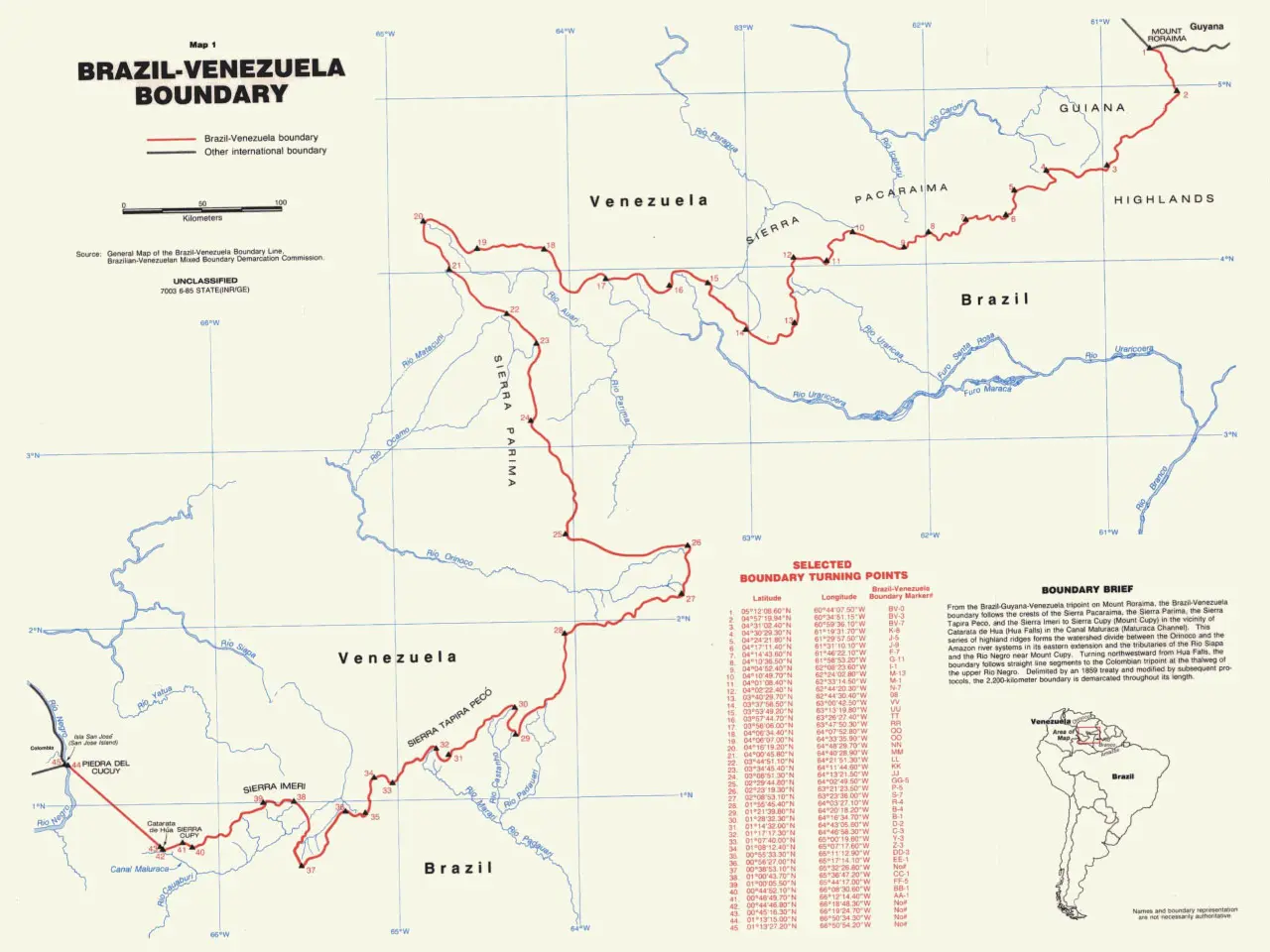
Kay-Uwe Ziegler, the AfD’s parliamentary secretary, recently shared a post calling for military confrontation against what he described as 'invasion armies' of migrants. Meanwhile, Hans-Thomas Tillschneider, an AfD candidate in Saxony-Anhalt, suggested that accepting a single dominant global power could reduce international tensions. Across the Atlantic, Donald Trump declared the U.S. could 'rule over Venezuela for years to come'. He also attacked Colombian President Gustavo Petro, calling him a 'sick man' who profits from cocaine sales to America. Trump’s advisor, Stephen Miller, reinforced this stance by claiming the world is governed by 'strength, violence, and power'. In Germany, AfD lawmaker Maximilian Krah proposed forming a German-Austrian-Hungarian axis with U.S. backing to restore Germany’s global influence. Frohnmaier went further, sketching a vision where the U.S. controls South America, Russia takes Ukraine, and China dominates East Asia. Extremist activist Martin Sellner, tied to the Identitarian Movement, echoed this mindset on social media, writing that 'Greenland goes to whoever is stronger, faster, and smarter'.
The statements highlight a shift toward power-centred geopolitics among certain factions. Legal experts and historians have raised concerns that such rhetoric could destabilise existing alliances and increase the risk of global entry.
Read also:
- PCOS-related Gas Buildup: Explanation, Control Strategies, and Further Insights
- Astral Lore and Celestial Arrangements: Defining Terms & In-Depth Insights - Historical Accounts & Glossary of Cosmic Mythology
- "Rural Idyls with Supercars: Astonishing Sites Where Residents Cruise McLarens and Ferraris for Groceries"
- Heartache Explained: Understanding Angina