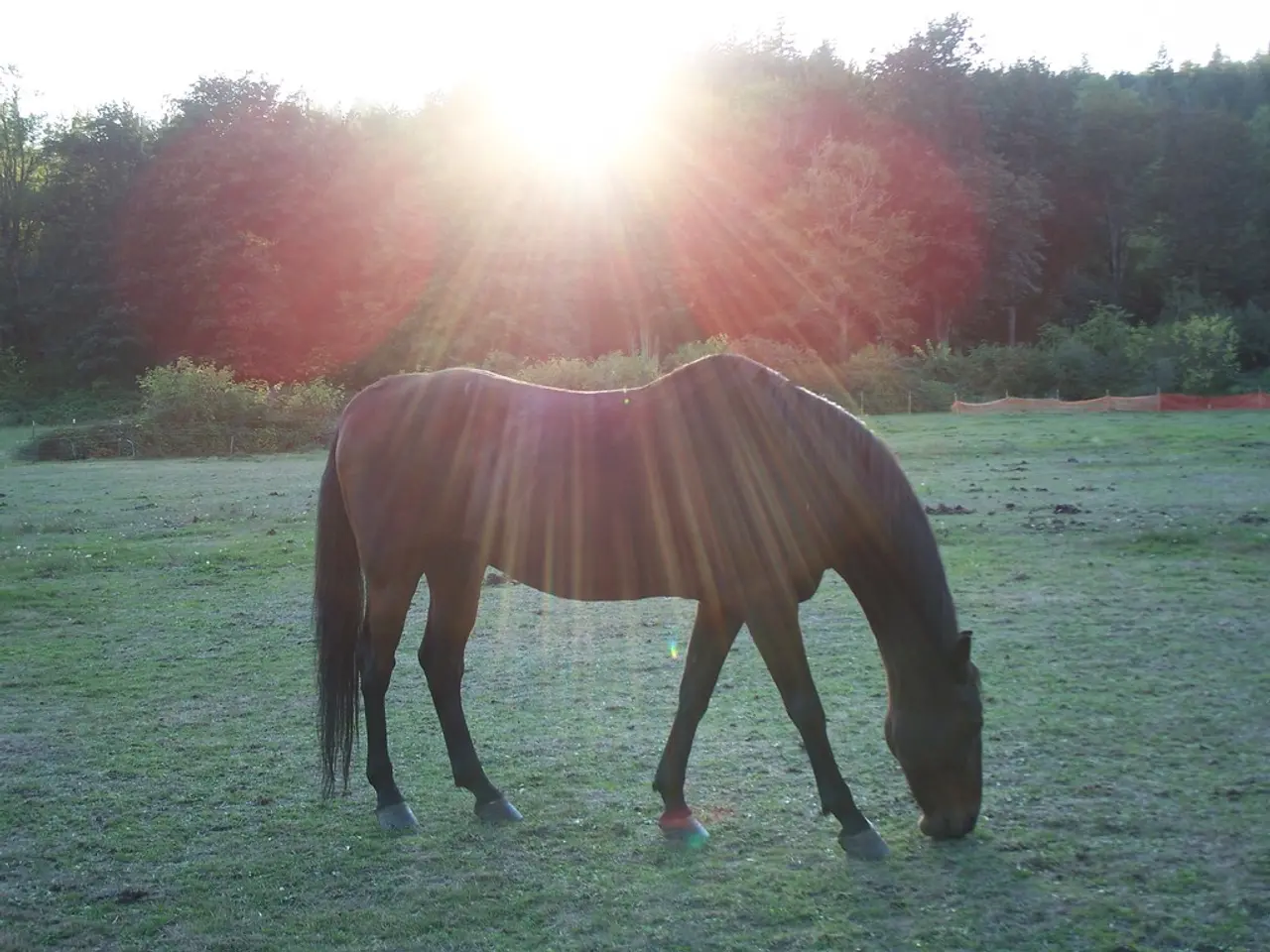
Exploring the Peculiar Bond: Investigating the Natural Harmony Between Birds and Horses
In the vast landscapes of nature, an unusual partnership thrives between birds and horses. This symbiosis, which dates back to the days when horses roamed the North American plains alongside early birds, is a prime example of mutualism and commensalism.
Birds often land on horses, conserving their energy in a safe environment, especially for those that cannot fly long distances. Horses, in turn, are aware of the benefits they derive from this relationship, allowing birds to perch on their backs without objection. This bond is not confined to open fields but extends to the animals on the move.
One of the key advantages for the birds is the abundance of food. Horses' hooves flush out insects like grasshoppers, beetles, and flies, providing a veritable feast for the birds. This behaviour is an example of mutualism, where both birds and horses benefit from the relationship.
Birds also offer relief to horses by removing insects stuck in their fur, providing relief from itchiness. On the other hand, birds gain protein-rich parasites while horses enjoy relief from pests that can cause infections. This relationship is an example of commensalism, where birds benefit without harming horses.
In some cases, the relationship isn't always beneficial for the birds. For instance, wild mustangs in the American West attract ravens, which scavenge parasites, suggesting that the birds do not always gain sustenance from the partnership.
This symbiosis is not exclusive to certain regions. In Germany, birds often accompany horses because certain bird species benefit from following grazing animals like horses to catch insects stirred up by their movement; particularly common are species like corvids (crows, magpies) and starlings. This symbiosis thrives in varied settings, from rural pastures to urban-adjacent farms.
Birds sometimes act as early warning systems for horses, issuing alarm cries to alert them to approaching threats. A 2017 Wildlife Act study observed birds issuing alarm cries that benefit nearby animals, even when the birds themselves face no danger.
This bird-horse relationship is a natural behaviour observed in wildlife, not related to Preakness betting. Some birds use horses as perches for rest or scouting for prey, offering protection from ground predators.
This symbiosis is resilient, adapting to modern landscapes while preserving its core functions. It is a testament to the intricate web of life and the ways in which different species can coexist and benefit from each other in the most unexpected ways.
Read also:
- Peptide YY (PYY): Exploring its Role in Appetite Suppression, Intestinal Health, and Cognitive Links
- Toddler Health: Rotavirus Signs, Origins, and Potential Complications
- Digestive issues and heart discomfort: Root causes and associated health conditions
- House Infernos: Deadly Hazards Surpassing the Flames