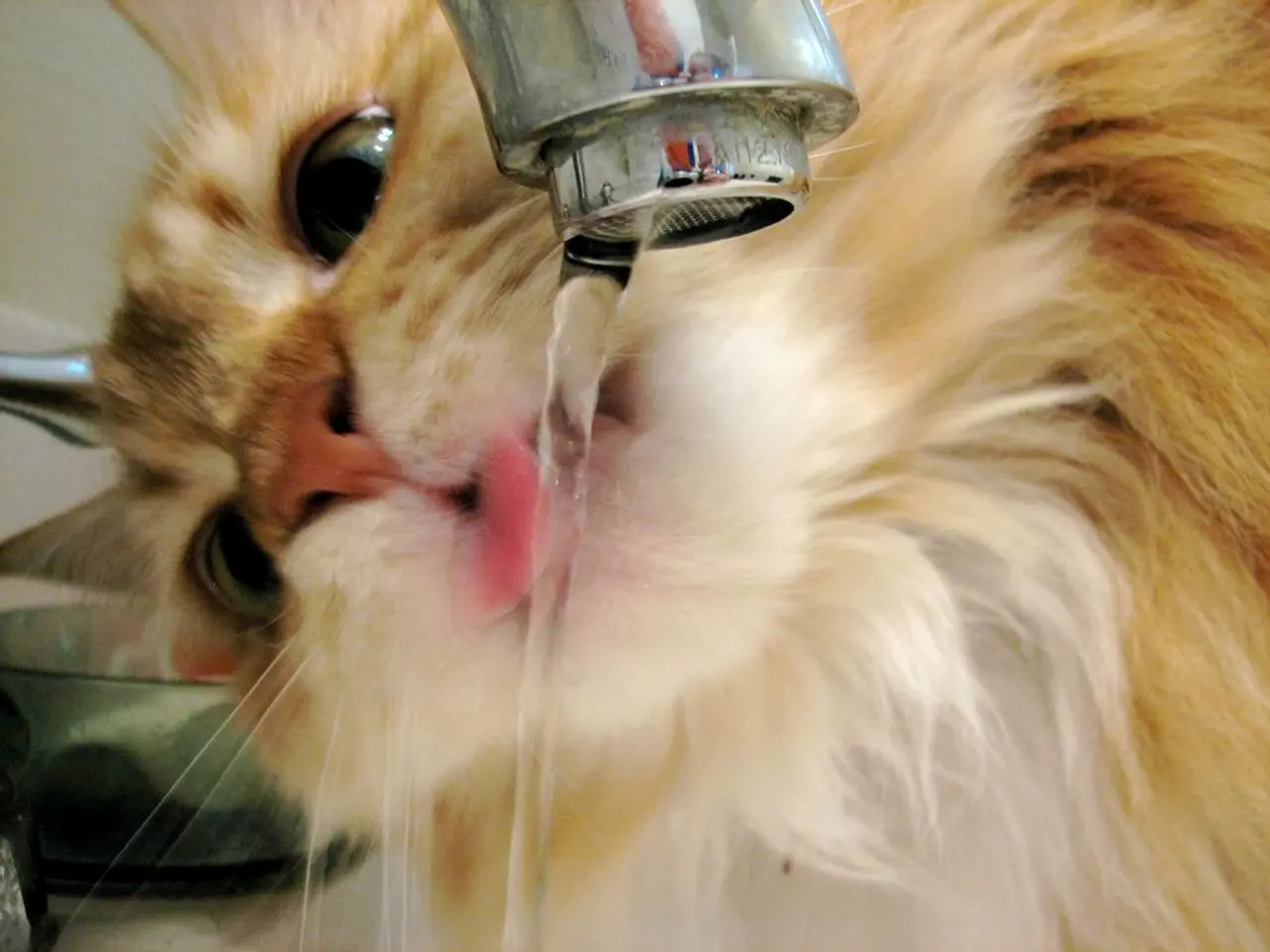
Excessive Water Consumption in Cats: Understanding the Reasons Behind It.
Cats, like humans, can experience various health issues that require careful monitoring and prompt treatment. Here are some key points to keep in mind when it comes to maintaining your feline friend's wellbeing.
Firstly, diabetes in cats may necessitate insulin and a structured feeding schedule. This condition, if left unchecked, can lead to serious complications, so it's crucial to work closely with your vet to manage it effectively.
Secondly, keeping track of your cat's water intake is essential. A sudden increase or decrease in water consumption could be a sign of underlying health issues, such as kidney disease or diabetes.
Thirdly, changes in urination habits or behaviour should not be ignored. If your cat starts urinating more frequently or shows signs of discomfort while doing so, it may indicate a problem that needs to be addressed by a vet.
Fourthly, a cat's diet plays a significant role in its health. Regularly reviewing your cat's diet and ensuring they are eating a balanced and nutritious meal can help in early detection of potential issues. For instance, chronic kidney disease can be managed with a special diet and medications, if diagnosed early.
Fifthly, litter box habits can provide valuable clues about your cat's health. If your cat starts urinating outside the litter box or shows signs of frequent urination, it could be a sign of a urinary tract infection or other health concerns.
Sixthly, early diagnosis of health issues can significantly improve treatment outcomes and preserve your cat's health. Therefore, it's important to monitor additional symptoms such as weight loss or decreased appetite.
Lastly, if you notice that your cat's thirst seems unusually high or persistent, it's best to schedule a vet check. Common medical causes of excessive drinking in cats include kidney disease, diabetes mellitus, hyperthyroidism, and urinary tract infections.
In such cases, the vet may request blood tests, a urine culture, or a urine sample to diagnose kidney issues, diabetes, or other concerns. By staying vigilant and observant, you can help ensure your cat lives a long, healthy, and happy life.
Read also:
- Peptide YY (PYY): Exploring its Role in Appetite Suppression, Intestinal Health, and Cognitive Links
- Toddler Health: Rotavirus Signs, Origins, and Potential Complications
- Digestive issues and heart discomfort: Root causes and associated health conditions
- House Infernos: Deadly Hazards Surpassing the Flames