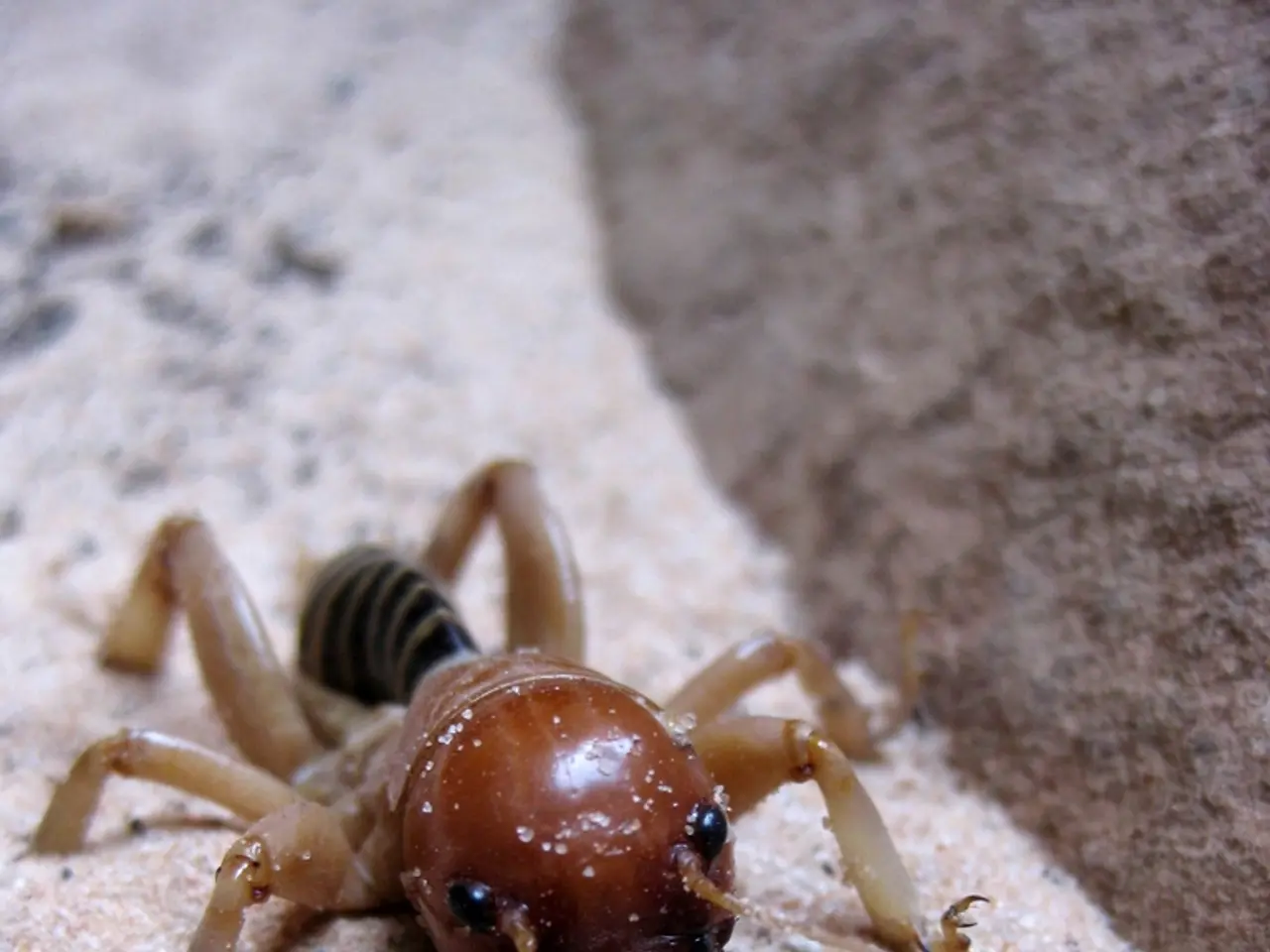
Evolutionary and ecological insights into the biology of the Dune Sandworms
In the captivating universe of Frank Herbert's Dune series, giant sandworms, known as solucans, play a pivotal role, shaping the planet's ecosystem and the destiny of its inhabitants.
These colossal creatures, reaching lengths of approximately 1,000 meters, are the superpredators of Arrakis, ruling the sand seas with an unmatched dominance. Their immense size and heavy structure make movement a challenge, as they navigate the rough terrain with linear movements, conserving energy for long-distance travel.
The sandworms' significance lies in their role in the formation of melange, a precious substance found only on Arrakis. This spice, which extends life, enhances physical and mental abilities, and facilitates space travel, is highly coveted among the elite classes in the Dune universe. Consumption of melange has significant physical and psychological effects on humans, including extended lifespan, rapid healing, and the development of psychic abilities.
The evolutionary success of these desert dwellers is shaped by environmental factors, such as the distinctiveness and adaptability of species. Sandworms possess filter-feeding structures and consume plankton, contributing to their evolution to larger sizes. On Arrakis, large populations of sandworms have survived due to reduced competition and scarcity of food and predators.
The study of sandworms is crucial for understanding their biomechanical characteristics, mobility, and physical structures, as well as their role in ecosystems. Understanding their behavior and responses is key to survival in Arrakis' harsh environment. For instance, desert travelers must prioritise silence and careful movement to avoid attracting giant sandworms with rhythmic sounds.
The Dune series, initiated in 1965, is a visionary science fiction series that tackles politics, religion, ecology, and humanity's relationship with technology. The first film adaptation, directed by David Lynch in 1984, did not meet expectations. However, the subsequent film directed by Denis Villeneuve, with its impressive visual effects and Hans Zimmer's unforgettable music, won numerous awards.
The Dune series has been continued with the support of Frank Herbert's son Brian Herbert and Kevin J. Anderson after his death. The second film of the Dune series, set to release in 2024, is called Dune: Part Two. Fans are eagerly awaiting the continuation of this epic saga, which promises to deliver the same level of excitement and intrigue as its predecessor.
In the realm of financial support, platforms like Patreon and YouTube offer ad-free experiences for their supporters of Evrim Ağacı. Patreon supporters can access an ad-free experience as long as they support Evrim Ağacı, while YouTube supporters get a reklamsız deneyim for every 50₺ they donate.
Despite their fearsome reputation, sandworms pose a significant threat to those who harvest the spice due to their immense size. Navigating Arrakis' treacherous landscapes requires caution and respect for these fascinating creatures. As we continue to explore and understand the Dune universe, the mystery and allure of the giant sandworms remain an integral part of its rich tapestry.
Read also:
- Peptide YY (PYY): Exploring its Role in Appetite Suppression, Intestinal Health, and Cognitive Links
- Toddler Health: Rotavirus Signs, Origins, and Potential Complications
- Digestive issues and heart discomfort: Root causes and associated health conditions
- House Infernos: Deadly Hazards Surpassing the Flames