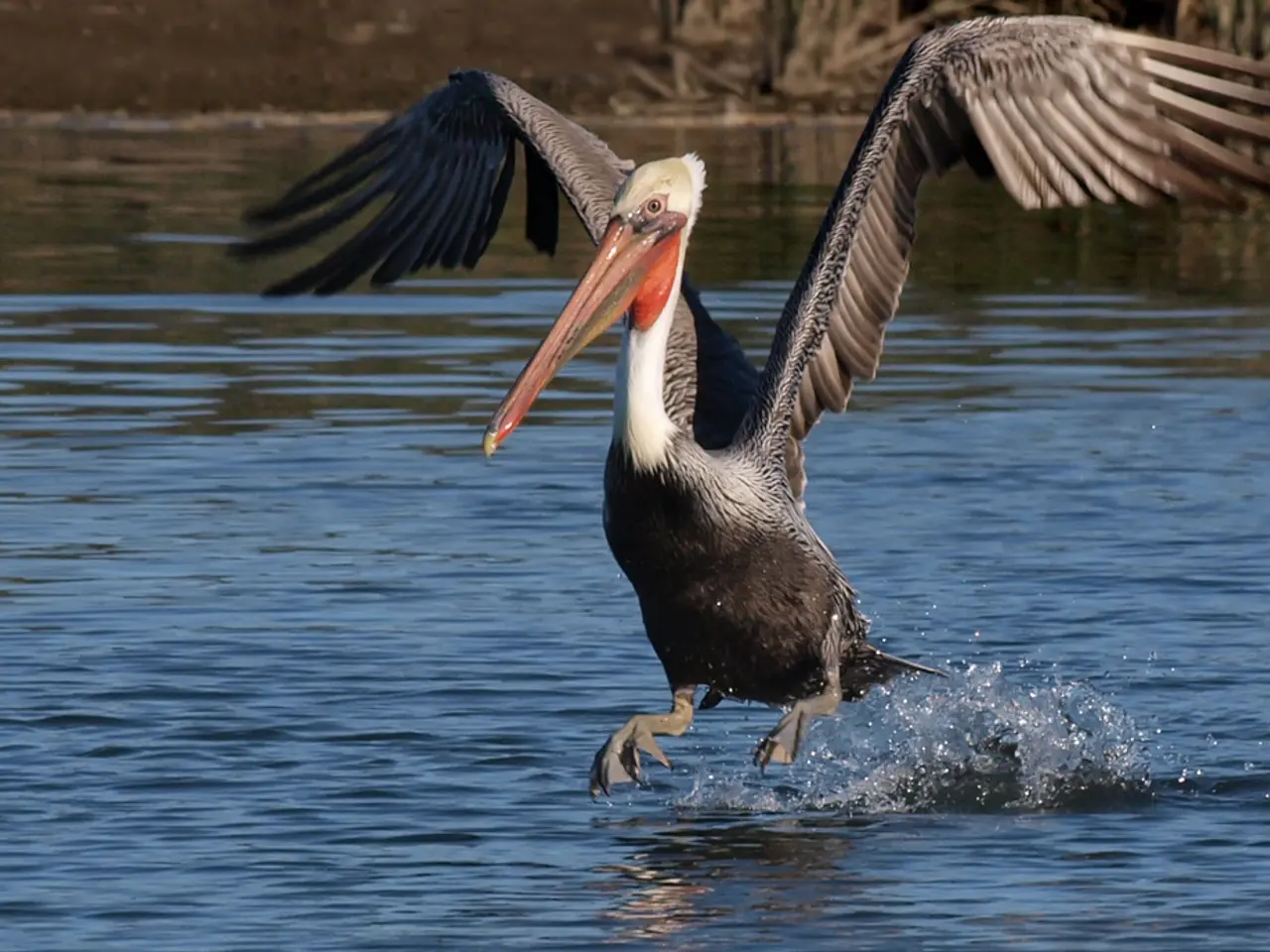
Engineers Struggle to Grasp the Complexity of Feathers, Despite Their Marvelous Qualities
Feathers, the lightweight and strong structures that adorn a variety of birds, have captivated humans for centuries. As far back as Ancient Greece, these natural wonders have inspired those who dream of soaring through the skies.
Today, feathers continue to amaze scientists and engineers with their multifunctional nature. Their water repellency, for instance, has led to new applications in water desalination, offering a potential solution to the world's water scarcity issues.
Beyond their role in water repellent clothing, the water repellency of feathers has interesting new applications in food safety. This property can help prevent contamination and maintain the quality of food products.
In the realm of acoustics, feathers have led to advancements that could revolutionise the way we design and build sound systems. The unique structure of feathers, with their barbs and barbules, allows them to act as miniature soundboards, creating intricate patterns of sound waves.
Feathers have also played a significant role in thermal regulation. Their ability to trap air and insulate birds in cold weather has inspired researchers to develop materials that could keep humans warm in the same way.
The future of research may involve robots sprouting wings, as mentioned in a new paper. Some researchers are currently building biohybrid devices using real bird feathers, aiming to harness their unique properties for technological advancements.
Emily Elizalde and her team are among those working on the development of these biohybrid devices. Their research focuses on understanding the unique properties of feathers, which can be made in thousands of varieties from a single material, keratin.
Sebastian Hendrickx-Rodriguez, a lead researcher, has published a new paper on the structure of bird feathers. This work could pave the way for further advancements in photonics, thermal regulation, acoustics, food safety, water safety, and water desalination.
As engineers and scientists continue to find inspiration from feathers in surprising ways, it's clear that these natural wonders will continue to shape the future of technology. From covert feathers in future flying machines to robots with feathered wings, the possibilities are endless.
In a recent contest, the Adafruit board took flight with feathers, showcasing the potential of this technology. As research progresses, it's exciting to imagine what other breakthroughs we might see in the future. One thing is for certain: feathers will continue to inspire and amaze us for generations to come.
Read also:
- Peptide YY (PYY): Exploring its Role in Appetite Suppression, Intestinal Health, and Cognitive Links
- Toddler Health: Rotavirus Signs, Origins, and Potential Complications
- Digestive issues and heart discomfort: Root causes and associated health conditions
- House Infernos: Deadly Hazards Surpassing the Flames