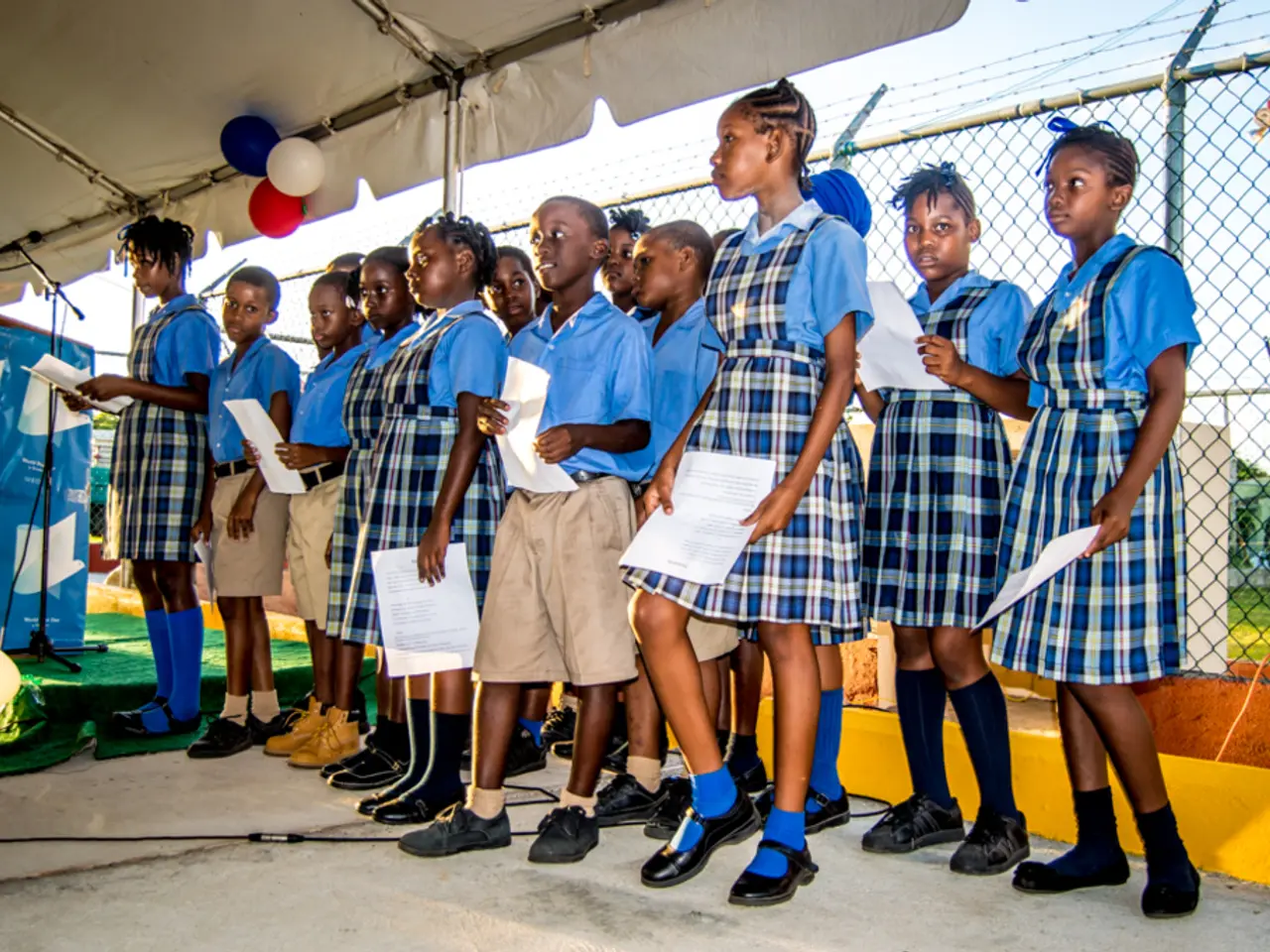
Discussing school shootings with children, uphold honesty and follow their guiding cues
In recent years, there has been a concerning rise in school shootings, with CNN reporting 44 such incidents this year alone. This alarming trend is not new, as data from the American Academy of Pediatrics shows a sharp increase in school shootings over the past few decades.
In the aftermath of a school shooting, it's essential to approach the situation with care and understanding. Kids gain a sense of security from the predictability of routine, as suggested by the American School Counselor Association's guide. However, limiting media consumption, including social media, radio, TV, and reading news online, can be beneficial in these trying times. If the media is not providing new, important information, disconnecting may be the best course of action.
Talking to children about coping strategies becomes crucial when they feel concerned or anxious. It's important to remember that children are more likely to come to parents for help when they're worried or upset if they know they can talk about it. Difficult conversations will always be a part of life, and resources like David Schonfeld's guidelines for talking to children after a tragic event can provide valuable guidance.
Schonfeld, a pediatrician who directs the National Center for School Crisis and Bereavement at Children's Hospital Los Angeles, advises asking a child what they've heard after a school shooting. This approach helps open up a dialogue and allows parents to address any misconceptions or fears the child may have.
Children often ask questions such as who is to blame, what could have been done to prevent the tragedy, or could it happen at their school? It's important to approach these questions with empathy and honesty, providing age-appropriate answers. A child's age will determine how much information to share, but their emotional reaction may also be linked to how much trauma they've experienced in the past or how closely they're connected to a tragedy.
For older children, converting feelings of anger or anxiety into action can be a helpful strategy. This is evident in the efforts of students like those from Marjory Stoneman Douglas High School in Parkland, Fla., who have become effective advocates in bringing attention to gun violence. Notably, groups like the March For Our Lives movement were founded by Parkland shooting survivors, organizing protests, advocating for stricter gun laws, and raising awareness on school safety issues.
In a crisis, the main purpose of media coverage is to understand what's happening. However, it's important to not make a school shooting a taboo topic. Melissa Brymer, director of terrorism and disaster programs at the UCLA-Duke University National Center for Child Traumatic Stress, emphasizes this point, suggesting that it's important to discuss these events with children in an age-appropriate manner.
In addition to open dialogue, maintaining routines can also help children feel secure. The American School Counselor Association recommends keeping routines in place to help children after a school shooting. For younger children, books like "Once I Was Very Very Scared" by Chandra Ghosh Ippen can assist parents and caregivers in helping preschool children figure out their own coping strategies.
In conclusion, addressing school shootings requires a delicate balance of open dialogue, maintaining routines, and providing age-appropriate information. Resources like Schonfeld's guidelines, Brymer's advice, and books like "Once I Was Very Very Scared" can provide valuable support for parents and caregivers navigating these difficult conversations.
Read also:
- Peptide YY (PYY): Exploring its Role in Appetite Suppression, Intestinal Health, and Cognitive Links
- Toddler Health: Rotavirus Signs, Origins, and Potential Complications
- Digestive issues and heart discomfort: Root causes and associated health conditions
- House Infernos: Deadly Hazards Surpassing the Flames