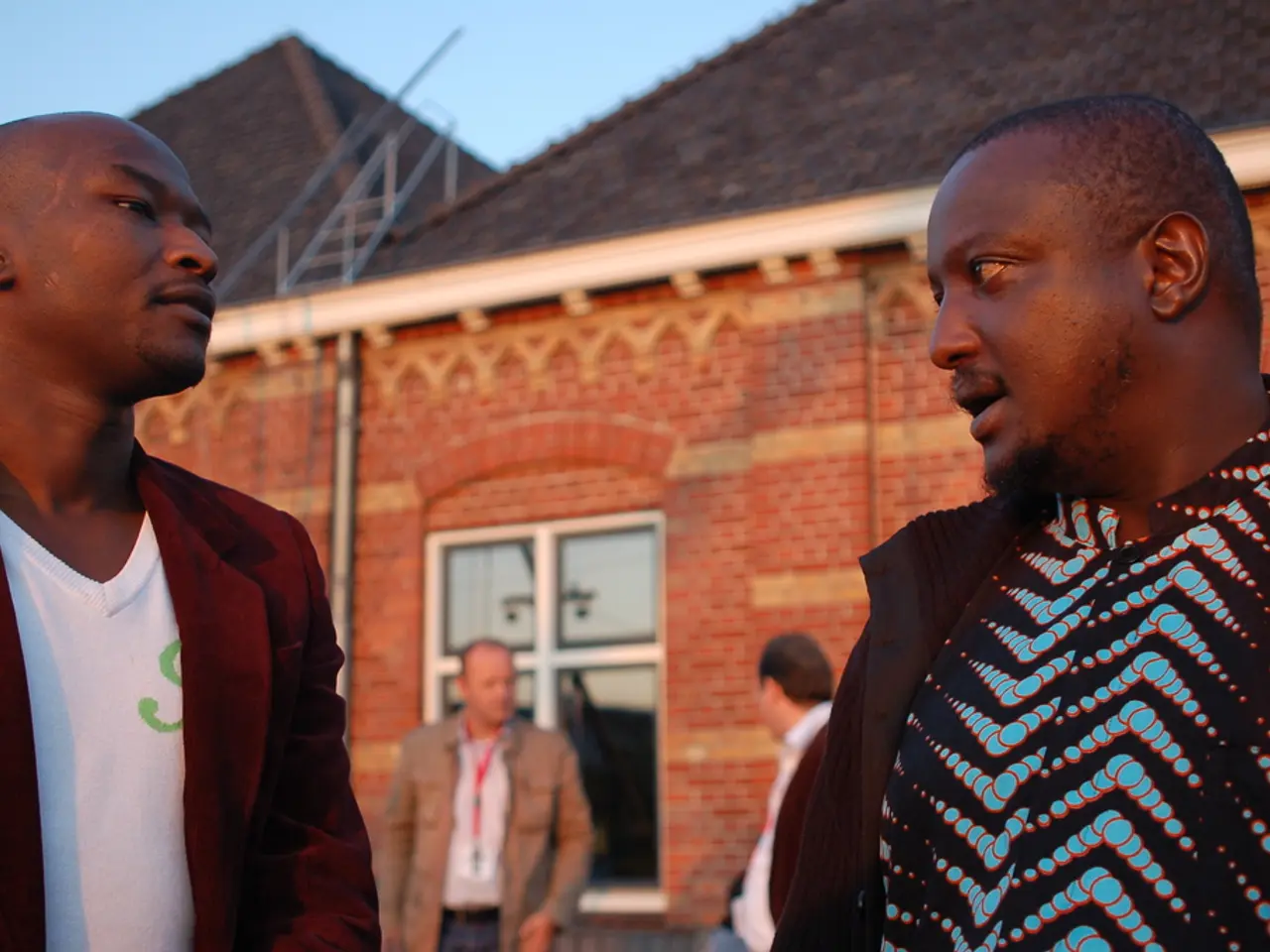
Demonstrators from across Africa assemble in Ghana, advocating for the annulment of Africa's outstanding financial obligations
Ghana, a continental leader in gold production and the world's second-largest cocoa exporter, is among more than 20 countries restructuring its international debt obligations. This financial challenge is not just a numbers game; it's a human development and democratic crisis, as more than half of African countries are already in or at high risk of debt distress, leaving governments unable to finance essential services.
In a recent development, Ghana's government, specifically through its Ministry of Finance and relevant economic authorities, has submitted an application to the International Monetary Fund (IMF) for a loan of 3 billion US dollars. This move comes after Ghana emerged from one of its worst economic crises in decades, which included a 2022 debt default and inflation exceeding 50%.
Finance Minister Cassiel Ato Forson echoed the concerns about debt, stating that in the case of these 23 African countries, debt servicing is outpacing spending on health and education. He emphasized that how debt is used is also important, and any freed-up resources should be used for job creation, wages, social protection, climate resilience, and structural transformations.
The petition, signed by ITUC-Africa's general secretary, Joel Akhator Odigie, calls for the "total and unconditional cancellation of Africa's unsustainable external debts as an act of reparative justice". The petition was received by President John Mahama of Ghana, and protestors in Ghana are demanding a radical overhaul of the global debt system, accusing creditors, the IMF, and the World Bank of strangling the African continent.
It's crucial to note that no new information about any other country was provided in this paragraph, and no information about France using its influence to speed up debt restructuring was provided either. However, the situation in Ghana serves as a microcosm of the broader debt crisis in Africa, and the calls for reform and reparative justice are gaining momentum.
Foreign aid is stalling as Africa's debt continues to spiral, and Forson stated that there is a difference between not being able to pay debt and not being willing to pay. The future of Africa's financial landscape remains uncertain, but one thing is clear: the continent's leaders and citizens are demanding change.
Read also:
- Peptide YY (PYY): Exploring its Role in Appetite Suppression, Intestinal Health, and Cognitive Links
- Toddler Health: Rotavirus Signs, Origins, and Potential Complications
- Digestive issues and heart discomfort: Root causes and associated health conditions
- House Infernos: Deadly Hazards Surpassing the Flames