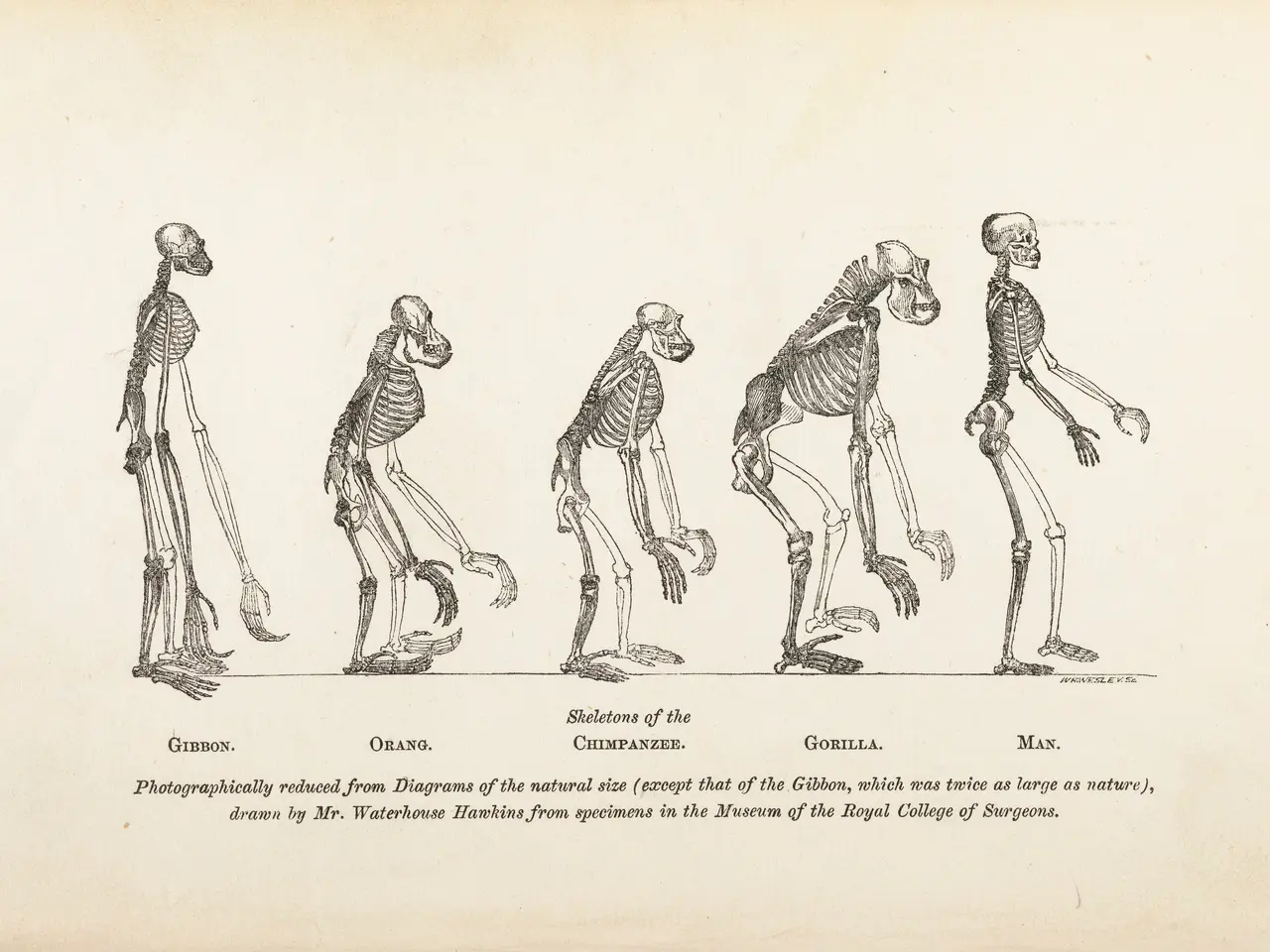
Chimpanzees reveal human-like intelligence as ancient tools rewrite history
New discoveries are reshaping our understanding of early human ancestors and their closest living relatives. Recent studies reveal how chimpanzees make sophisticated decisions, while ancient tools and fossils provide fresh insights into the lives of hominins millions of years ago.
One key finding shows that chimps adjust their behaviour based on evidence—much like humans. Meanwhile, archaeological digs in Kenya and the Czech Republic have uncovered some of the earliest known stone tools, offering clues about early toolmaking skills.
In 2025, researchers confirmed that chimpanzees and bonobos can infer what humans are thinking. The study found that these primates adjust their actions depending on a person's perceived knowledge or intentions. This ability suggests a deeper cognitive connection between humans and their closest relatives.
Earlier observations in West Africa's Antankarana National Park also highlighted chimpanzees' social intelligence. Groups were seen sharing fermented fruit, behaviour that points to long-standing traditions of food-sharing and even the consumption of fermented foods. Such practices may have deep evolutionary roots.
Meanwhile, archaeological work has uncovered some of the oldest stone tools ever found. At Kenya's Namorutunga site, researchers identified Oldowan tools dating back 2.9 million years. These simple but effective implements were used for nearly 200,000 years, showing early hominins' skill in crafting and using tools. Another discovery in the Czech Republic revealed a 30,000-year-old Stone Age toolkit, including small knives for cutting, scraping, and drilling.
Fossil evidence has also shed light on early human relatives. The Burtele foot, once mysterious, was linked to Australopithecus deyiremeda, a hominin with primitive teeth and grasping feet. Another find, an adult Paranthropus robustus, confirmed the species stood just over a metre tall and walked fully upright. Though strong-gripped, Paranthropus likely used their hands more for processing food than for making tools.
These findings paint a clearer picture of how early humans and their relatives lived, thought, and adapted. Chimpanzees' ability to read intentions and share food hints at shared cognitive traits, while ancient tools and fossils reveal the growing complexity of early hominin behaviour. Together, the discoveries help trace the origins of human-like intelligence and technology.
Read also:
- Ignorant Youth Unfamiliar with Quebec's Cultural Landscape
- PCOS-related Gas Buildup: Explanation, Control Strategies, and Further Insights
- Astral Lore and Celestial Arrangements: Defining Terms & In-Depth Insights - Historical Accounts & Glossary of Cosmic Mythology
- "Rural Idyls with Supercars: Astonishing Sites Where Residents Cruise McLarens and Ferraris for Groceries"