Child Symptoms and Prevention Strategies for Detecting Spies
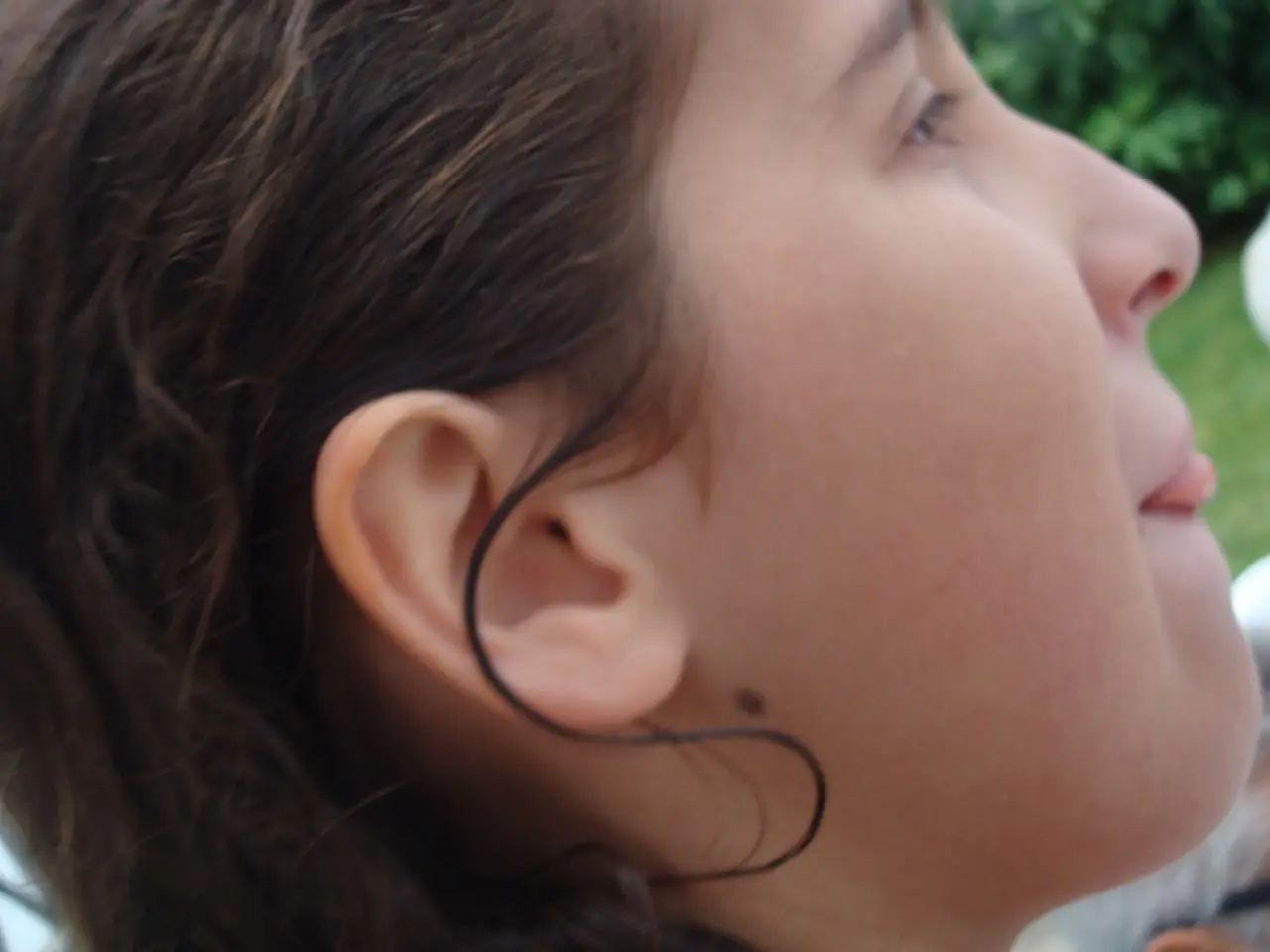
Moles, scientifically known as melanocytic nevi, are small lesions that can vary in colour and size. They are a common skin feature and usually appear during the first two decades of a child's life.
While most moles are harmless, it's essential to be aware of potential signs that could indicate a serious condition such as malignant melanoma. This form of skin cancer can develop in moles, and early detection and prevention are crucial.
UV rays are responsible for most cases of malignant melanoma in previously healthy children. To help control the development of moles, it's advisable to limit sun exposure and apply sunscreen. Seeking shady areas and covering children with hats and full-length clothes can also help prevent mole development.
It's normal for a child to develop moles at any point, and they can be flat, raised, small, or enlarged. However, certain moles may require medical attention. Congenital moles or atypical moles are more prone to melanoma. If a child is developing an excessive number of moles within a short time frame, it is advisable to get it checked.
If a child's mole grows rapidly, appears ugly, or is raised to a visible degree, it could be a matter of concern and should be checked by a dermatologist. Similarly, a bleeding mole may indicate irritation and should prompt a consultation with a dermatologist, especially if it appears wound-like on a child's skin.
An "ABCDE" rule for pediatric melanoma has been proposed: A melanotic, B leeding, Bumps, uniform C color, small D diameter, D de novo, and E evolution. Indicators for a possible melanoma on a child's skin include new or changing pigmented lesions, asymmetry, irregular borders, colour variation, diameter greater than 6 mm, rapid growth, pain or tenderness, and nodules. Any suspicious or changing mole should be evaluated by a dermatologist promptly.
An enlarged mole, specifically one that is 7 inches in diameter or more, may require medical attention. If a child is continually scratching at a mole, it may be a sign to consult a dermatologist, who may recommend removal if necessary.
While moles are a common part of childhood, it's essential to be aware of potential signs that could indicate a serious condition. By being vigilant and seeking medical advice when necessary, parents can help ensure their child's skin health.
Read also:
- Peptide YY (PYY): Exploring its Role in Appetite Suppression, Intestinal Health, and Cognitive Links
- Toddler Health: Rotavirus Signs, Origins, and Potential Complications
- Digestive issues and heart discomfort: Root causes and associated health conditions
- House Infernos: Deadly Hazards Surpassing the Flames