Bear-on-Bear Showdown: Sizing Up the Polar Bear and Grizzly Bear's Strength and Size
In the vast, icy landscapes of the Arctic, a fascinating natural phenomenon is taking place. The meeting of polar bears and grizzly bears, once thought to be a mere myth, has been confirmed through DNA evidence. These hybrid bears, known as Grolar bears, are a rare sight in the wild, with only about 1 percent of the two species currently hybridized.
This hybridization is largely due to the effects of climate change, which has been causing polar bears and grizzlies to come into contact more frequently. This was evident in a 2024 analysis of about 800 polar bears and grizzly bears across North America and Greenland, where only eight of the sample displayed hybrid genes.
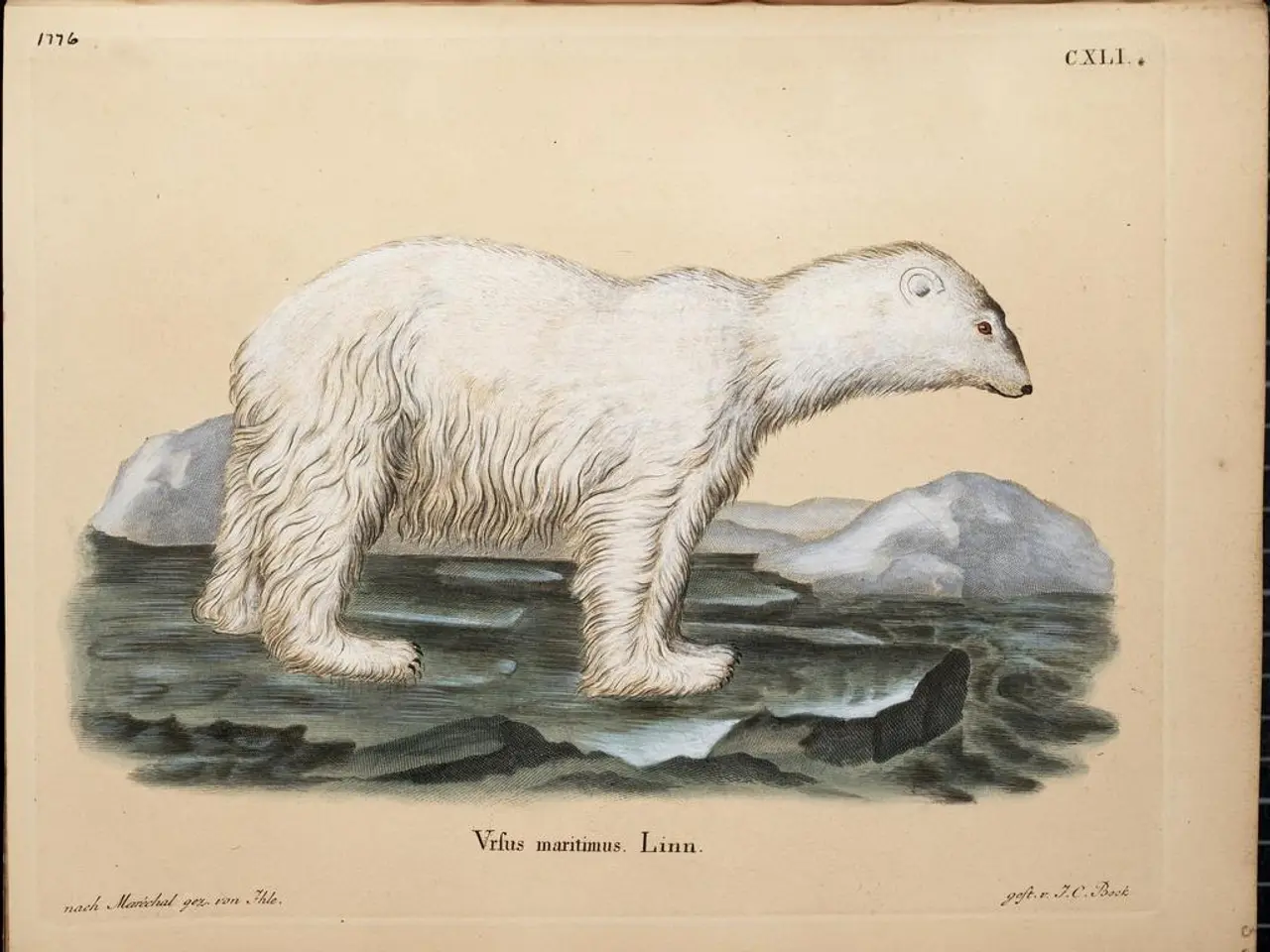
Grolar bears inherit traits from both parents, blending the hunting skills of polar bears with the adaptability of grizzlies. While polar bears are specialized hunters, with a preference for seals and relying on sea ice for hunting, grizzly bears have a more varied diet, eating everything from berries to small mammals and scavenging carcasses.
On the other hand, male grizzly bears are known for taking down large prey like moose. However, it's important to note that attacks on humans are relatively rare across all bear species. Only about 40 bear attacks on humans occur globally per year.
Black bears, whose habitats more commonly overlap with human populations, are more likely to attack people. Yet, these encounters are still relatively infrequent, and it's crucial to remember that most bears prefer to avoid human contact.
Pizzly bears, another type of hybrid bear, and Grolar bears are primarily found in the northern regions of Canada and Alaska, where the habitats of polar bears and grizzly bears overlap. As the Arctic continues to change, it will be interesting to see how these unique creatures adapt and how their numbers might evolve.