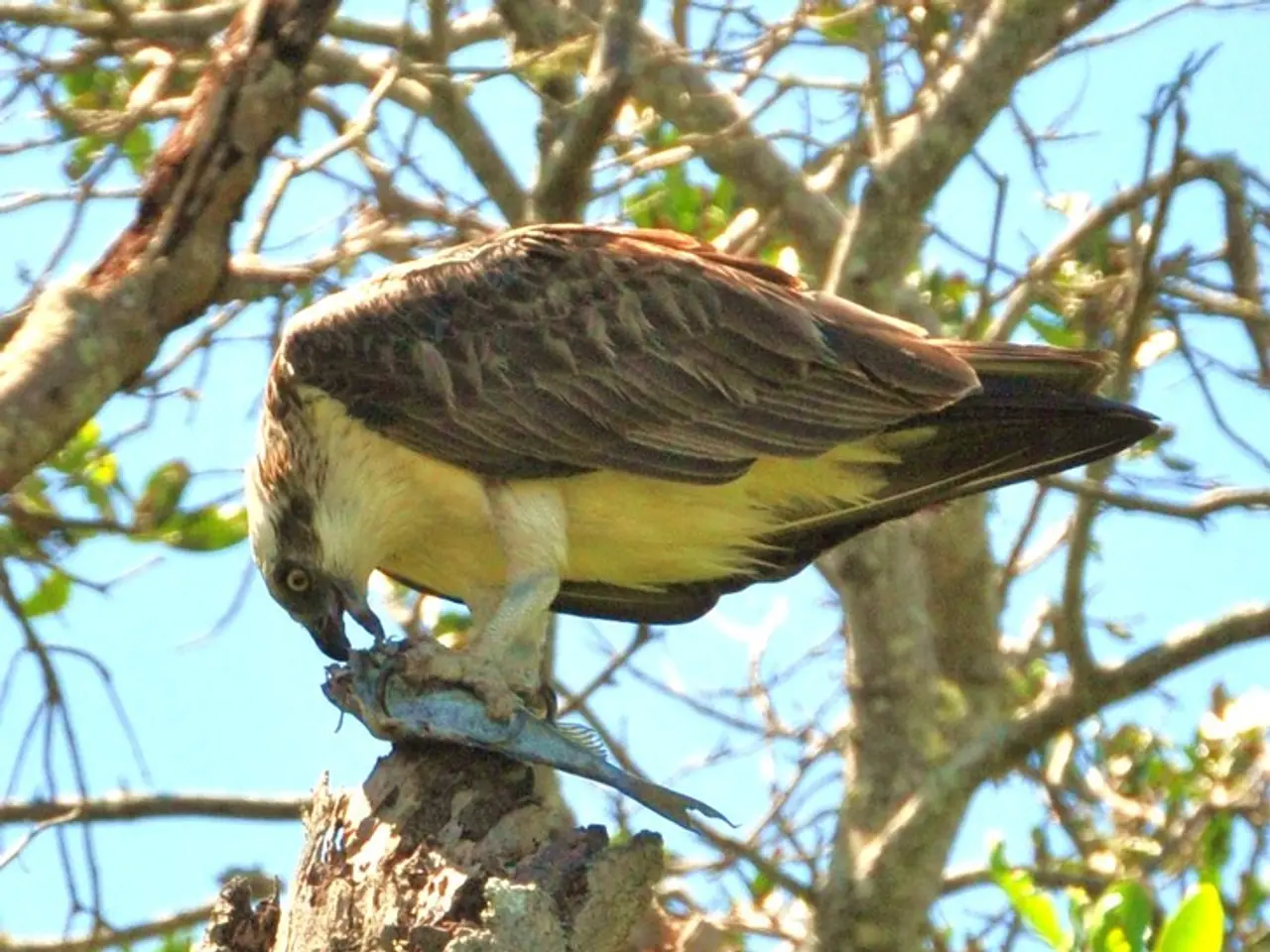
Are the Buzzard and Vulture two identical avian species, referred to by distinct names?
==============================================================
In the vast expanse of our planet, two groups of birds play crucial roles in maintaining the balance of life: vultures and buzzards. While their names may be interchangeably used in some regions, these two groups are distinct and have evolved unique adaptations to thrive in their respective environments.
Vultures, such as the turkey vulture and black vulture, are predominantly found in warmer regions of the Americas, Africa, the Middle East, and parts of Asia. They have an extraordinary sense of smell that helps them locate decaying animals from great distances, and their strong stomach acids kill harmful bacteria, allowing them to consume carrion without getting sick. This unique ability is vital for maintaining healthy ecosystems, as vultures help prevent disease by consuming dead animals before they decompose.
On the other hand, buzzards, often referred to as raptors of the Buteo genus, are most commonly found across Eurasia, especially in open landscapes such as farmland and forests. The common buzzard, for instance, is a hawk common to Europe and parts of Asia. Buzzards, like the red-shouldered hawk and rough-legged hawk, help control populations of rodents and other small animals by hunting live prey. Their role in maintaining the balance of predator-prey relationships in their habitats is equally important.
Despite some common names suggesting otherwise, vultures and buzzards are not the same bird. Old World vultures, such as those found in Africa, Europe, and Asia, are more closely related to hawks and eagles, while New World vultures share ancestry with storks. Old World vultures have stronger feet and use their vision to locate food, while New World vultures primarily feed on dead prey using their sense of smell.
The vital role of both vultures and buzzards in nature is in need of protection. Many vulture species worldwide are suffering from population decline, in part related to human activities. The decline of these birds could have serious consequences for the ecosystems they inhabit, as they play a critical role in maintaining healthy environments.
For instance, in North America, "buzzard" often refers to a vulture, not a hawk. The species Buteo lagopus is called the rough-legged hawk in North America and the rough-legged buzzard in Europe. This highlights the importance of understanding the differences between these two groups of birds and appreciating the unique roles they play in nature.
In conclusion, vultures and buzzards are two distinct groups of birds with critical roles in maintaining healthy ecosystems. While they may share some similarities, their unique adaptations and roles in their respective environments make them invaluable to the balance of life on our planet. As human activities continue to threaten their populations, it is crucial that we work to protect these remarkable birds and ensure their continued survival.
Read also:
- Peptide YY (PYY): Exploring its Role in Appetite Suppression, Intestinal Health, and Cognitive Links
- Toddler Health: Rotavirus Signs, Origins, and Potential Complications
- Digestive issues and heart discomfort: Root causes and associated health conditions
- House Infernos: Deadly Hazards Surpassing the Flames